 Events
 Podcast
 Columns
 Library
 Contact




Dec 28, 24
Filed under: Analysis, Incarceration, Midwest


Michigan Abolition and Prisoner Solidarity (MAPS) presents an analysis of the prison staffing crisis and the implications of the crisis for abolitionist organizing.
The staffing crisis has dominated prison news in Michigan and many other regions, and poses some interesting and challenging questions for abolitionist thinking and practice. We hope this writing stimulates conversation, and we welcome dialogue about your thoughts on staffing in Michigan or wherever you are. Stay tuned for a zine version coming soon!
On July 3, 2024, Byron Osborn, the president of the Michigan Corrections Organization (MCO), the union that represents the state’s correctional officers, publicly demanded that Governor Gretchen Whitmer deploy Michigan’s National Guard to the state’s prisons. The purpose was to address “dire” staffing shortages across the Michigan Department of Corrections (MDOC). Osborn cited mass resignations, lack of hiring incentives in the form of pension plans and salary boosts, and “a significant gang problem” as reasons for MDOC staff shortages. The MDOC has seen the staffing problems worsen since the COVID-19 pandemic, with less than 70% of correctional officer (or “CO”) positions filled at some facilities and nearly 1,000 total vacancies across the system. In response, MDOC administrators rejected the MCO’s call, stating that sending in the National Guard would be a “temporary measure” that wouldn’t solve the underlying issue, adding that soldiers haven’t been “trained to operate in [the prison] environment.”[1]
The call for the National Guard came in a long-running scuffle between the MDOC and the MCO, that is, between the managers of the state prison system and the guards who operate the prisons on a day-to-day basis. We have watched these tensions with interest, eyebrows raised and popcorn in hand, because cracks in this carceral coalition have the potential to create opportunities for abolitionists. But this episode, and the staffing crisis more generally, also raise some complicated questions for abolitionists in Michigan and beyond that we think are worth reflecting on.
From an abolitionist perspective, we might assume staff shortages are cause for celebration, since they undermine the smooth operation of the prison system. But they also have a lot of negative impacts on the lives of prisoners and on the generalized conditions of confinement—many of them harmful, some of them unanticipated, and most of them complex. At the same time, increasing staffing would strengthen already-existing repression inside, inject more resources into the carceral system, and reinforce carceral notions like “prisons create jobs” and “full staffing makes prisons safer.” Historically, it was the mass expansion of prisons in Michigan, which we document in our zine, “Containing the Crisis,” that led to today’s staffing shortages.[2] Paradoxically, the structural tensions resulting from this rapid expansion might now help to undermine and, we hope, eventually destroy the prison industrial complex (PIC).
The staffing crisis is an opportunity to examine some of the key dynamics playing out in Michigan prisons today and to reflect on the implications for abolitionist strategy and prisoner solidarity work. Like a thread in a spider’s web, if we pull on the question of today’s staffing crisis we can observe the ties and tensions across its weave. In what follows, we share some history, analysis, and questions about this crisis. What we initially thought would be a short polemic has instead turned into a broader discussion that we hope will stimulate further investigation, reflection, creativity, and conversation.
What is new about this crisis?
First, let’s consider the normative framing of the staffing crisis in Michigan and unpack some of its assumptions. We are cautious about using the language of “crisis” adopted by the likes of CO unions, prison administrators, and state legislators, all of whom have their own agendas and stand to benefit in different ways from increasing staffing levels. Do current prison staffing levels really constitute a crisis, as these actors claim? And if so, a crisis for whom? Who decides what the “optimal” staffing levels are—and optimal for whom? Most immediately, do the current staff shortages really represent a new phenomenon, or are they a continuation of ongoing dynamics?
Even with all of these questions and caveats, we still think it makes sense to use the term “crisis” here, not to support the narratives of carceral actors, but to reflect three things: first, the many negative impacts of staffing levels reported by our comrades inside; second, the seemingly intractable nature of the staffing problem for MDOC; and third, our hope that the difficulties of staffing Michigan prisons could contribute to weakening or shrinking the PIC. In the latter respect, especially, we mean “crisis” in the best sense of the word.
In order to get a better understanding of how “new” the staffing situation in MDOC is, we used a database to search for reports of staffing shortages in Michigan media from the last few decades (see the Appendix for the full analysis). The first thing we found was that references to MDOC staffing shortages go back to the 1990s. (In the 1970s and ‘80s, by contrast, the word “shortage” was associated not with staff levels but with prison capacity or “beds.”) At a basic level, then, this phenomenon has been around for some time. But the cause and extent of the shortages have changed over time. The reports can be grouped into three phases, each with different dynamics and causes.
The first phase, which runs from the 1990s to about 2007, was characterized by staffing shortages caused by the continued expansion of the prison system. During this phase, prison capacity, prisoner numbers, and staffing levels were all generally increasing.
The second phase, from 2007-2020, was shaped by the financial crisis and the resulting turn to austerity by the state government, and was exacerbated by the beginning of a wave of retirements of COs who had been hired during the prison boom of the 1980s and ‘90s. During this phase, prison capacity, prisoner numbers, and staffing levels all began to trend downward, a reversal from the previous phase.
Finally, the third phase, which begins in 2020 and runs to the present, is marked by the COVID-19 pandemic, which accelerated the steady wave of retirements and resignations already underway.[3] Some COs retired or quit to protect themselves from the virus; others, in line with the growing anger from the political right, did so out of resentment for the (admittedly minor) state-mandated precautions like tests and quarantine periods; still others did so due to the worsening conditions at work caused, in circular fashion, by low staffing levels themselves. Meanwhile, improved wages in the private sector have made MDOC jobs less attractive by comparison.
To be clear, Michigan’s prison population has declined from a peak of about 52,000 in 2007 to about 33,000 in 2024.[4] Yet staff shortages have seemingly gotten worse. What is especially striking about the present staffing crisis, then, is the fact that these shortages coexist with the shrinking prisoner population. The fact that MDOC has been unable to fill its vacancies even as the number of guards required to manage the prisons declines suggests that recruiting and hiring new guards is even more difficult than it seems at first glance, and that there are major structural factors.
To illustrate the scale of the problem, vacancy rates by facility as of October 2024 are shown in Figure 1. The average rate of 17% disguises a broad range, from 1% at the facility in Saginaw to 35% at the G. Robert Cotton facility in Jackson. Of the 26 facilities, 46% had staff vacancy rates over 20%, with six facilities clocking in at over 30% vacancy. In absolute numbers, there were 964 vacancies out of 5,524 total positions systemwide.[5]
Reports from comrades inside suggest that staff shortages and their effects have indeed intensified during the latest, pandemic-influenced phase. In July 2024, one currently imprisoned comrade, who prefers to remain anonymous, summarized the situation as follows:
Just as we thought prison couldn’t get any worse, in comes COVID. COVID caused a decay in prisons that without being here, society would never have a clue. It is a decay that I don’t think prisons in Michigan will ever recover from. First because the COs were not immune, it caused a shortage in staff that caused other COs to be overworked—getting mandates working 16-hour shifts at least three times a week—which caused COs to become frustrated and exhausted. [This] translated into COs taking it out on inmates. It caused a lot of staff to quit which literally caused the MDOC to have to shut down units, and even whole prisons, because they didn’t have enough staff to run them. I don’t know if anyone paid attention but for the first time during the COVID epidemic, the MDOC put out a commercial trying to get people to come work for them they were so short on staff and it didn’t work so the MDOC lowered the bar on who was able to work for them which resulted in the inmates being treated worse, because those hired were not mentally capable of being professionals and are not held accountable for their abuses because the MDOC can’t afford to lose them. These are all things that still exist even to this day.
So although staffing levels have been considered a serious problem, and at times even a crisis, for the last thirty years or so, this doesn’t mean that nothing has changed. The reasons for pressures on staffing have shifted significantly over this period, and with these changes the situation has intensified. Today something new is going on, and it’s worth reflecting on its implications for abolitionist prisoner solidarity.
What are the real reasons for MDOC’s recruitment and retention problems?
The MCO’s call for the National Guard to be deployed to Michigan prisons was less a real proposal than a public relations stunt to support their current campaign to win better pay and benefits, including allowing guards to participate in the state police pension plan. They claim that the reason MDOC struggles to recruit and retain COs is poor compensation and benefits. But MDOC has raised CO salaries by 18% since 2019 and spent $55 million on recruitment and retention bonuses over the last three years without making a dent in the problem.[6] When a CO from Michigan asked on a Reddit thread if higher pension and pay help with staff retention in other states, a Redditor in New Jersey replied: “Not at all… njdoc is losing ppl every week to local PDs and our max is 123k with pension and social security and tons of benefits but our academy classes are scraping the bottom of the barrel barely getting anyone into the academy and their recruiting in 4 states.”[7] While compensation may be a factor, then, it is instructive to consider other reasons for MDOC’s staff shortages.
An important part of the story has to do with the aforementioned history of prison expansion. Michigan expanded its prison system significantly in the ‘80s and ‘90s—the state built 31 new facilities between 1976 and 2006. Prison staff likewise increased by about seven times as a result.[8] State employees are required to work for 30 years to qualify for their pension. Starting around 2010, many of the guards who were hired during this earlier period of prison expansion became eligible to retire, and are jumping at the chance as working conditions deteriorate. This helps to explain why so many COs are leaving their jobs, and the high number of retirements increases the pressure on MDOC to recruit more and more new staff to replace them.
There are also geographical factors to consider. Many state prisons in Michigan were sited in white rural areas like the Upper Peninsula as a double gift from local lawmakers: prisons replaced factories and mines as the major employers in the region during deindustrialization, and prison populations artificially inflated census counts and siphoned public resources and political power away from more diverse urban centers (“prison gerrymandering”). However, the UP has seen a significant population decline in recent years. Between 2010 and 2020, the UP lost about 10,000 people, or over 3% of the population (this drop included the entire population of around 1,000 Level I captives at Ojibway prison which closed in 2018). Only one-third of the population today is between the working ages of 25 and 54.[9] These conditions contribute significantly to MDOC staffing problems in the Upper Peninsula. According to MDOC’s data, of the 12 prisons with staff vacancies of over 20%, five are located in the UP: Marquette (32%), Alger (30%), Chippewa (26%), Kinross (23%), and Baraga (23%).
This cycle of rural depopulation and disinvestment in the rural north contrasts with the dynamic of better private-sector economic opportunities in urban areas that likely contribute to staff shortages in the Lower Peninsula.
Another geographical factor concerns those locations at which MDOC built multiple facilities in the same city, effectively doubling, tripling, or quadrupling the staff recruitment demands on the same local labor and housing pool. For example, 11 facilities are clustered in four cities in the Lower Peninsula (Jackson, Ionia, Muskegon, and St. Louis), with between two and four facilities in each city. All four prisons in Jackson have serious staffing issues: Cotton (35%), Cooper Street (34%), Egeler (31%), and Parnall (23%). Similarly, Chippewa County in the UP has two prisons, each with a vacancy rate of over 20%.[10]
Demographics also impact staffing bottlenecks at Women’s Huron Valley (WHV), the only women’s facility in the MDOC, since certain positions can only be filled by female-gendered staff. WHV also boasts the highest total number of positions, currently 344, across all the facilities, with 110 vacant (32%).[11] The ban on male staff began in 2009 after a $100 million class-action lawsuit over years of sexual assault of imprisoned people by male staffers.[12] This ban was followed by lawsuits by male staff who alleged discrimination (and lost), and by female staff who alleged excessive overtime and won a $750,000 settlement in 2018.[13] The excessive overtime lawsuit is of note since MCO is now complaining of excessive overtime statewide, not only for female COs at the women’s facility.
Over the longer term, one of the most important factors is that you don’t get into the business of torturing and caging people without inflicting harm on yourself as well. In 2022, the Prison Policy Initiative looked into why prison systems across the U.S. were experiencing such significant staffing problems. The report explains that correctional work has a serious impact on guards’ physical and mental health: “Correctional jobs are stressful and traumatic, leading to high rates of burnout, absenteeism, and staff turnover. But when people quit or don’t show up for work, this makes the job even worse for their colleagues, who are often left working overtime shifts alongside new, inexperienced coworkers.”[14]
This is definitely happening in Michigan. Comrades inside, as well as media reports and propaganda from the MCO, all agree that MDOC staff are working double shifts and mandatory overtime, while complaining of health issues, fatigue, lack of time with family, and risk of accidents and injury. We hear stories that COs are getting younger and younger, less and less experienced, as the prisons burn through their new recruits. One comrade joked, “I think they have have bypassed high school hiring and have started recruiting at middle schools!” Four months later, he wrote:
Things remain tenuous with staffing as I am sure you are aware. We did receive a batch (16) of the new class of recruits two weeks ago. Four have already quit, and typically no more than half of each class remains once they start mandating double shifts (as many as four a week). That kind of environment would cause even the most eager employee to think otherwise, especially considering the pay and lack of historical unionized benefits. They don’t want to be here almost as much as we don’t!
A final factor to consider has to do with political resistance to state mandates on the part of the guards. For example, we know that many COs retired and quit during the pandemic in order to protect themselves from the virus.[15] But we also know that others were angered by and actively resisted the state’s masking, testing, and quarantine requirements. This reactionary frustration was part of the reason that the state backed off from mandating vaccines for guards. As Daniel Manville, the director of the Civil Rights Clinic at Michigan State University told the Detroit News: “The Department of Corrections has always been scared to ask staff to do anything in fear that they’ll quit.”[16]
Similarly, comrades inside tell us that many guards are retiring and quitting before a new requirement to wear body cameras comes into effect because they want to avoid the possibility that their actions could be subject to external scrutiny. The comrade quoted above goes on to state: “The facility is really worried about these new body cameras. They have delayed installing them as long as they could, but apparently a federal judge has said they can no longer drag their feet.”
What are the potential negative impacts of staff shortages on prisoners’ lives?
To answer this question we first have to identify the kinds of work that COs do. Generally speaking, they are not the ones doing the necessary, “reproductive” labor that’s essential for the prisoners who are held captive in a given facility to survive, like preparing and serving food and cleaning the facilities. This kind of work is carried out primarily by prisoners themselves. (This is also why prisoner strikes can be effective.) In contrast, the roles that staff fill are primarily about policing, surveilling, and managing the incarcerated people under their control.
Given the kinds of work they are tasked with, what impacts do staff shortages have on prisoners? We’ve heard a lot from comrades inside about negative effects. For example, many prisons have reduced or eliminated programs, yard time, library time, and visits from family and friends in order to deal with low staffing levels. This impacts the health and wellbeing of people in ways that, while not directly violent, are still very harmful. Shortages can also reduce prisoners’ access to commissary supplies, food, phones, and mail. And as departments shuffle people around to try to consolidate, transfers between facilities can further disrupt access to all of these things, as well as disrupting prisoner friendships and community.[17]
Staff shortages can also disrupt access to the limited healthcare available, in both everyday and emergency situations, as guards are slower, less capable, and less willing to respond. While our focus is on custodial staff, there is also a healthcare staff shortage, no doubt exacerbated by the COVID-19 pandemic’s strain on healthcare staffing nationwide.[18] Meanwhile, MDOC’s former corporate healthcare management contractor failed to pay $35 million owed to local healthcare providers, who are now even more reluctant to work with MDOC as subcontractors.[19]
Non-custodial staff who previously trained and worked as COs are being enlisted to fill in custodial shifts. This means the services and programs these managers normally run are less available. We’ve heard that GED classes and various programs required for parole have been slowed or suspended. Some programs are only available in certain units, resulting in bottlenecks as people wait for bedspace to open up so they can access a program. As a result, it is taking longer for prisoners to become eligible for parole. Notably, the longer it takes prisoners to meet parole requirements, the higher the prison population remains.
Lockdowns (keeping people in their cells or housing units for most or all of the time) have also become more common in the current phase of staffing shortages. Initially, lockdowns greatly intensified at the onset of the COVID-19 pandemic as a substitute for providing adequate healthcare (Michigan boasted some of the highest prison mortality rates during the first year of the pandemic).[20] However, MDOC’s ever-changing justifications indicate that lockdowns are the goal, rather than an inevitable symptom of circumstances beyond MDOC’s control. Even after pandemic measures were lifted in 2022, lockdowns continued with far greater intensity than before the pandemic. “COVID precautions” ceased to be the pretext to justify keeping people locked down; today, it is staffing shortages that supposedly require facilities to institute frequent lockdowns. The justification has changed, while oppressive conditions remain.
Silja Talvi reports that lockdowns appear to be on the rise nationwide, and they can be as harmful as solitary confinement—or even more harmful, since lockdowns are more ad hoc with little predictability or routine.[21] We’ve heard multiple reports of rebellion and near riots in MDOC triggered by lockdowns and lost yard time in recent years.
Greg Wines, released from MDOC in 2022 after 25 years, echoes some of these points in an editorial he published in the Detroit News:
While the conditions in Michigan’s prisons have never been acceptable, since COVID, the situation has deteriorated even further. For example, due to staffing shortages, recreational time outdoors was frequently limited, and sometimes eliminated entirely. As a result, many people had nowhere to burn off their energy and spend time outside of their cell. This often resulted in tension, fighting and violence as mental health deteriorated. Staff shortages also had a major impact on response time as corrections officers were overworked. Not only was staff slow to respond to medical emergencies or incidents of self-harm, but they were also slow to respond to any fights within the system.[22]
Wines suggests that staff shortages, by reducing access to recreation, can raise tensions among prisoners and create the conditions for fights. This is part of the story, but it’s also the case that guards are the source of most of the violence that occurs in prisons. When MCO proclaims that shortstaffing makes prisons less safe, they are alluding to safety for themselves, and “safety” in the sense of maintaining the routine order of institutional violence. Safety for guards—for example, from rebellions—does not typically translate to safety for prisoners, in a context of abuse and repression.
The understaffing discourse tends to assume that when people are shuffled around or added to fill staff positions they are equivalent and interchangeable. We saw this in the MCO’s call for the National Guard to staff MDOC facilities. But there are differences among COs in experience, temperament, personal history, and personal politics. We are hearing from inside that these differences are sometimes seriously impactful—and not always in ways we might predict. For example:
- The National Guard was called into Ohio, South Carolina, Montana, and Indiana prisons in 2020. They reportedly received little to no training, and immediately inflicted physical violence.[23]
- Teachers, chaplains, librarians, and other non-custodial staff are enlisted to fill CO shifts. This is termed “augmentation,” and state DOCs as well as the federal Bureau of Prisons have admitted to “augmenting.” In the MDOC, we hear that only those with previous training as COs are being reassigned, but in other states some augmentation uses staff with no training as COs. Reports from inside suggest that many are “overzealous” in their new or renewed use of power, control, and violence.
- While MCO uses the racist dog whistle of “gang problems” to attract attention to their campaign, the reality is that certain groups of COs are openly white nationalist gangs, complete with gang tattoos and accessories. Staff turnover could impact the power balance among CO factions like these differently at different facilities in ways we can’t predict.
- Relatedly, we hear from inside that administrative staff are so busy putting out fires caused by understaffing (e.g., covering shifts, dealing with turnover, fielding complaints from staff and prisoners) that they are not disciplining rogue COs. Further, since they do not want to risk losing more staff, the worst COs have more leverage to get away with violent, abusive behavior. We hear from both people inside, and COs themselves on Reddit, that it is much harder for COs to lose their jobs for any reason. This dynamic leads to a field day for rogue COs to abuse and exploit with even more impunity than before.
- As noted above by our comrades inside, recent crops of recruits have reportedly sunk to new lows of immaturity and lack of basic capacity. They are also receiving less and less orientation and training. Turnover of new recruits has become extreme, with an estimated attrition rate of half within their first month. The MDOC reported a 55% jump in recruitment to its October academy over the previous class, but they do not publicly report attrition rates.[24]
In sum, the combination of reduced access to recreation, programming, and services; lockdowns; and the changing makeup of staff cohorts are some of the factors we’ve heard about that negatively impact people caged in MDOC facilities under conditions of severe short staffing.
What are the potential positive impacts of staff shortages on prisoners’ lives?
On the other hand, staff shortages can mean that prison administrators and guards have less capacity and willingness to intervene in the daily lives of prisoners in adverse ways. For prisoners who face constant surveillance and repression—to the point that prisons can feel “overstaffed”—reducing the presence of guards can feel like a relief.[25] Even when guards are present, they may not have support, which means that they may be reluctant to intervene if something happens; or they may be performing multiple roles at the same time, splitting their attention and dispersing their focus. They may also be so tired from pulling double shifts that we hear they are literally sleeping on the job, or so inexperienced that they are not confident enough to step in. We have heard stories of newbie guards staying behind the glass at their command posts while on the job, too scared to emerge.
Staff shortages, then, could imply a relative buffering or distancing of the iron fist of the administration—a small but nevertheless significant breathing space in which prisoners might move together with a newfound sense of autonomy. We know, for example, that during the first wave of the ongoing COVID-19 pandemic, guards didn’t want to get too close to prisoners for fear of being infected, and some folks inside were able to use this to their advantage—gathering in cells to share food and news, redistributing commissary items and care packages with each other, and having impromptu parties while the guards stayed out of the way. We also heard reports of more prisoners accessing and sharing cellphones behind bars, strengthening relationships with people on the outside.
These informal gatherings each carry the seeds of political education, collective action, and rebellion, as prisoners made use of less guard oversight and more autonomy inside to self-organize. The late summer 2020 uprising at the Chippewa facility, a part of the larger uprising for Black lives, should be understood in this context.
Of course, this autonomy is also precarious and from the outside it’s hard to know how this dynamic plays out over time. Prisoners who benefit from less surveillance will be understandably reluctant to discuss those benefits and conditions in heavily surveilled mail or phone calls. But, what we’ve heard about an exceptional moment (Spring-Summer 2020) suggests there may be ways that staffing shortages, in combination with other factors, can contribute to the creation of spaces of autonomy and organizing potential.
Transfers resulting from MDOC’s attempts to consolidate staff and prisoners may be very disruptive, as noted above, but in terms of organizing, transfers might cut both ways. Transfers can be punitive (as in the repression that Kinross rebels faced in 2016), but they are also part of the bureaucratic shifting of populations across facilities to meet the MDOC’s material and political needs. They can disrupt organizing relationships, but transferred individuals can also disseminate discussion about conditions of confinement, about strategies for rebellion, and about rebellions that already occurred elsewhere. Of course, this might require building new relationships from scratch. Communication about organizing is safest in person. We don’t know if transfers have increased enough or been a significant enough factor to impact dissemination of rebellion and organizing, but it’s worth watching for this potential positive effect.
As for program cuts, this question is also a complicated one. Above we noted that many comrades have written to us about the wide range of problems that result from these cuts. Programming can be one of the only opportunities some of our incarcerated comrades have to socialize across units or with outside volunteers, and may be requirements for parole. Yet as abolitionists, we also think it’s important to understand that the expansion of programming in the 1970s was part of a counterinsurgent response to prisoner rebellions like the Attica uprising. As Orisanmi Burton documents in his new book Tip of the Spear, imprisoned rebels at the time argued that reforms like programming not only failed to alter the prison system’s “fundamental inhumanity” but also “were consciously designed to forestall resistance.”[26] Even the surge in members of the public volunteering to aid prison programming developed out of these underlying motives. The political context is different than it was in the 1970s, of course, and we want our comrades to have access to the programs they want and need. But it’s worth keeping these counterinsurgent effects in mind as we weigh the positive and negative impacts of staff shortages.
Can’t we just set people free?
The mainstream narrative about staff shortages in the media—pushed by the MCO, MDOC leadership, and state politicians alike—assumes that the solution is to hire more guards. With few exceptions, they ignore the obvious alternative: setting people free.
Unsurprisingly, most advocates of this alternative are or have been imprisoned. In Greg Wines’ op-ed in the Detroit News, for example, he argues that the best response to what he calls a “true crisis” of staff shortages would be for the state legislature to pass the Second Look Sentencing Act. Second Look would let people who have already served twenty years petition a judge for a reduced sentence, at the discretion of the Parole Board. Wines points out that thousands of people in Michigan who are currently ineligible for parole could potentially be released as a result of this legislation, and this would reduce the need for so many prison staff: “Our taxpayers are spending millions of dollars to keep [these people] behind bars, and it isn’t making us any safer. Instead, it’s exacerbating the staffing crisis in our prisons and diverting resources that can actually build safer communities.”[27]
Similarly, Jerry Metcalf, currently held captive at Thumb Correctional Facility, wrote an article in 2022 arguing that the solution to staff shortages isn’t to hire more guards but to release prisoners. “What’s needed is not more money. At least not for prison guards. What’s needed is some common sense and simple math skills. Let’s close some of these decrepit, structurally-unsound and overcrowded prisons. Let’s release some of these incarcerated people (like me) who aren’t sentenced to life in prison, but have already spent decades behind bars. Let’s stop keeping people locked up past any reasonable duration of time simply because politics demands it.” Metcalf argued that legislative reforms like the “Good Time” credit bill, which would allow prisoners with “good behavior” to get time off their sentence, would resolve staffing pressures.[28]
Even some MDOC employees have come out in favor of this approach. For example, in an anonymous op-ed in the Detroit Metro Times, a retired MDOC guard agreed that the key to solving the staffing crisis is to release prisoners. “With nearly three decades of direct experience, I can tell you there are many folks incarcerated who don’t need to be there, who are ready to leave prison and never do anything that would put them back inside. Most of those folks have served 10 years or more and it would be a huge help to the system if there was a way for a judge to take a hard look at their cases and consider them for release.” Like Wines, he argues that Second Look legislation would have this effect. “With fewer people in prison,” he concludes, “less hours would have to be mandated onto MDOC staff.”[29]
These arguments helpfully reframe the problem of staff shortages as a problem of over-incarceration, centering the freeing of prisoners rather than the hiring of guards as the best way to solve their negative impact. Partly as a result of “Truth in Sentencing” legislation that was passed in the 1990s, Michigan ranks worst in the nation for the proportion of people entering prison with long sentences (66%), worst in average sentence length, and worst in average time served.[30] This continues to be the case despite the steep decline in Michigan’s incarcerated population since 2007. Legislative reforms like Second Look and Good Time could weaken these punitive laws and help to alleviate some of these problems.
At the same time, from an abolitionist perspective, reforms like these—if they are able to pass: even a modest sentencing reform with bipartisan support failed to pass in the legislature’s 2024 lame duck session—could also function as counterinsurgency techniques, consolidating and strengthening the prison system rather than contributing to its abolition. For example, legislation that encourages “good behavior” could easily have the effect of reducing resistance by prison rebels, making it harder to organize collective action like strikes or protests on the inside, in exchange for a theoretical shot at early parole. After all, the Michigan Parole Board has proven itself highly resistant to the pressures of the staffing crisis, still rejecting many bids for parole among those eligible already. Such legislation could also shore up the criminalizing distinction between “good prisoners” who deserve to be released and “bad prisoners” who deserve to stay locked up. This is the flip side of the anonymous former guard’s op-ed: he argues that the Second Look bill would “make the system more secure.” And this is why we’re reluctant to actively support these reforms, even if many of our comrades inside see them as sources of hope. Moreover, we urge all these people to dream bigger than piecemeal legislation.
In a plot twist, one of our imprisoned comrades had an opportunity to ask MDOC Director Heidi Washington herself about releasing prisoners as a solution to the staffing crisis when she visited the prison where he’s locked up. Washington claimed that her hands are indeed tied by the legislature. However, we remain skeptical of this excuse given the frequent delays in parole for those already eligible. In other words, there are more direct approaches to begin freeing prisoners immediately that do not depend on legislative reforms.
Facility closures and overcrowding
At a higher scale, staff shortages can put pressure on MDOC to shut down units or even entire prisons. In June 2024, for example, MDOC announced the closure of an 88-bed housing unit at Baraga Correctional Facility in the Upper Peninsula, one of the prisons that has experienced persistently high staff vacancies. Baraga’s vacancy of 34% in July[31] dropped to 23% by October,[32] likely primarily because of the unit closure. According to MLive, this is just one of the “multiple units” that have been closed around the state due to staff shortages.[33] In 2022, MDOC closed Michigan Reformatory as well as four housing units at Gus Harrison Correctional Facility in order to consolidate staff and deal with a 21% vacancy rate.[34]
There is a dynamic tension between facility closures and overcrowding at the facilities that remain. Mario Smith, held captive at Kinross Correctional Facility, responded to Osborn’s call for the National Guard to be deployed in MDOC by pointing out that most facilities are overcrowded at baseline. Pole barn units, built as temporary housing to accommodate the suddenly burgeoning prison population in the 1990s, were designed to comply with federal law if they housed four people per “cube.” But MDOC routinely houses double that number, stacked in bunk beds, “warehousing [us] like we are living in 1779.”[35] Despite the significant decline in the prison population since 2007, overcrowding persists.
It’s unclear from the reports available whether the most recent unit closures are due to a systemwide reduction in numbers of imprisoned people, or merely a shifting of bed locations to accommodate staff availability, or some combination of the two. If the closures are primarily to accommodate staffing needs, then these unit closures might actually exacerbate the overcrowding that Smith described. If that’s the case, closures may negatively impact living conditions at the facilities that receive the people transferred.
It is conceivable that the vacancy rate at a given prison could rise to such a level that it would be forced to close. Perhaps they would first try to close a unit or two, like at Baraga, but eventually the facility would lose efficiencies of scale. MDOC recently created a “volunteer relief program to send corrections officersto understaffed prisons” and is exploring the “viability of permanent traveling units of staff.”[36] But this clearly isn’t a solution to the problem—at best, it merely redistributes staffing pressures across the prison system.
Interestingly, Director Washington also told our comrade that newly-sentenced people are being held in their sentencing counties, when possible, until bedspace opens up in MDOC. This too has implications for the lives of imprisoned people, since county jails are generally not designed for long-term custody and vary widely in quality of services, programming, visitation, etc. It likely also has implications for staffing and bedspace at some of the county jails–another version of redistribution of the problem.
If shutting down prisons is part of the abolitionist project, closures resulting from staff shortages seems like one of the most promising, and perhaps more realistic, paths to get there. We celebrate these closures, but recognize that the immediate impact may be an exacerbation of overcrowding at remaining facilities. These are complex processes involving multiple factors, including a declining prisoner population, but the bottom line is that staff shortages can and do contribute to shrinking the state’s prison system in a way that we hope will be permanent.
Abolitionist strategy in a context of crisis
How, then, should abolitionists respond to the staffing crisis? Will an intensifying crisis only lead to more suffering inside through unchecked CO abuse, lost programming, delayed parole, even worse healthcare, etc.? Or could the staffing crisis reach a tipping point where captives have to be released and more and more units and prisons are forced to close?
We certainly don’t wish to align our goals with those of organizations like the MCO, who seek to use the crisis to get more money and better pensions. We suspect that even if staffing magically returned to pre-pandemic levels, conditions would remain worse than before for people behind bars, and maybe even worsen. Nor do we want to align in any way with the likes of libertarian politicians, who seek to shrink the prison system by transferring fiscal costs from the state onto parolees and families via e-carceration. This crisis is a fresh opportunity to differentiate between abolitionist strategies that exploit fissures in the PIC front versus critiques of the status quo that reaffirm carcerality.[37]
These are challenging questions that need to be considered in the context of each prison system. The current staffing crisis forms the conditions in which all prisoner and abolitionist struggles will necessarily occur in the present. Here in Michigan, the structural tensions underlying this crisis may already be approaching a tipping point all on their own. We have highlighted three dynamics that constitute vicious cycles related to understaffing in ratio to prison population, and there may be more.
First, staff shortages lead to bottlenecks in people gaining access to programming required to make parole. Programs may depend on the availability of specific staff, or access may depend on a bed being available in a specific unit, leading to more and more delays in release. This, in turn, keeps the prison population larger, exacerbating staff shortages, leading to more delays in access to programming, and so on.
Second, the more COs that leave, the worse working conditions become due to mandatory overtime, stress, less seasoned coworkers, more frustrated captives, state mandates, etc. As a result, it becomes harder and harder to recruit and retain COs.
Third, for prisons sited in remote rural areas like the Upper Peninsula, the ongoing shrinking and aging of the local population will continue to reduce economic opportunities in a growth-dependent capitalist economy, resulting in further population decline.
These vicious cycles suggest that the staffing crisis has internal momentum. Prison and unit closures are already beginning to happen, though not as quickly as we’d like to see. Perhaps as abolitionists we don’t need to intervene to try to accelerate a process that is already in motion—it’s also not clear if this would even be possible. But we also can’t just sit back and wait for the PIC to collapse on its own.
In this context of crisis, we can advocate for our comrades inside to get what they most need when they need it even as conditions continue to get worse in significant ways. Needs might range from more yard time and recreation, to access to programming required for parole, to reentry support so people don’t flounder and get sucked back inside. We can also look for ways to support and encourage comrades to take advantage of the staffing crisis to the greatest extent possible to build autonomy, organize communities, and capacity to resist. As in the past, we can continue to work on the outside to create conditions in which prison rebels are better supported if and when they take action on their own.
We can also work to further drive a wedge between MCO and the MDOC administration, that is, between staff and their often reviled bosses. This might play out at the state level, that is, between MCO leadership and MDOC central administration, or at the individual facility level where relations between COs and wardens are already strained by staffing issues. For example, when our advocacy targeting abuse by frontline staff creates more hassles for wardens, it may help increase tensions between different fractions of the prison authorities and take some of the pressure off prisoners in ways we can’t always fully see. Or, when we appeal mailroom staff rejections of our newsletter to their warden as well as to MDOC central administration, this might exacerbate the friction between each of these parties by reminding administrators that even if they try to turn a blind eye to CO misconduct, they are still in the public eye. In this changing context, we can attempt to keep up demands for better conditions while both leveraging and exacerbating pressures on staff.
More generally, we can continue doing political education work about abolition and the need to free everyone, not only those who have served long sentences and can impress a judge and parole board. Wherever possible, we can strive to reduce the number of people entering the system in the first place. All forms of decarceration are on the table.
The staffing crisis presents challenges for abolitionist organizers but it doesn’t fundamentally alter abolitionist strategy. Still, new problems may spark new opportunities for creativity and consciousness raising inside and out. The pressures and contradictions facing the state now mean that organizers and rebels on both sides of the prison walls can and should demand more than before. As MDOC and the state begin making concessions, such as around sentencing and parole reforms, it’s critical to keep pushing and radicalizing demands. As abolitionists, we oppose compromises like carve-outs and e-carceration at this moment with glimmers of hope for making the PIC infeasible.
With these thoughts, we hope that we can crack open a conversation about staff shortages in and across different contexts. This exchange may help all of us generate new ways of disrupting and destroying the prison regime in solidarity with our comrades on both sides of the bars.
Summary
What is the upshot of this exploration? We have seen that:
- The prison staffing crisis is not entirely new, but it is different and more extreme than previous moments. It qualifies for the label “crisis” in the best possible sense—that it may pose a threat to the existence of the prison system as we know it.
- The real reasons for staff recruitment and retention problems are not pay or pension, but rather the inherent violence and trauma of the job; structural dynamics like a retiring generation of COs, shrinking rural populations, and improved wages in the private sector; and exacerbation of all this by the COVID-19 pandemic. Despite a one-third reduction in the prison population since its peak in 2007, staff recruitment still cannot keep up.
- On the negative side, the staffing crisis leads to more suffering for imprisoned people by way of loss of access to programming or services that may be important for health, life, community, political organizing, or making parole. Services and community may also be disrupted by transfers as prisons consolidate to meet staffing needs.
- Prisons have increased their use of lockdowns as a management tool, resulting in rebellions and worsening mental health problems.
- Not all staff are alike, and disruption of the staff ecosystem has had uneven, often negative results. For example, in a context where administrators are afraid to discipline COs for fear of them leaving, COs get away with even more rampant abuse with impunity.
- On the positive side, staff shortages may open up pockets of limited autonomy, with less surveillance and opportunities for freedom, agency, and self-organizing. However, taking political advantage of this dynamic may be difficult when there are frequent lockdowns and uneven political education and organizing on the inside.
- Mainstream media, MDOC, and MCO discourse all remain silent on the obvious solution of setting more people free. Even tepid efforts at sentencing reform can’t get out of legislative committees, but as abolitionists we recognize that these types of “good behavior” reforms tend to isolate prison rebels and dampen organizing.
- Staff shortages, along with declining prison populations, are leading to unit and facility closures that likely represent permanent shrinkage of the state prison system. In the near term, they may also exacerbate overcrowded living conditions.
- Attempts to redistribute staff shortages among facilities, or from prisons to county jails, will not fix the problem.
- Vicious cycles with a momentum of their own seem to be forcing shrinkage of the prison system, regardless of our interventions.
- In this context, we can double down on our essential strategies of educating the public about abolition and advocating for comrades inside to get their needs met.
- At the same time, we can look for new opportunities and leverage. The state and MDOC are in an unrelenting crisis and may soon be forced to make concessions. When they do, as abolitionists we must demand more than Band-Aid reforms.
- Prison rebels may also find openings to demand more and do more. As abolitionists outside, we work to create conditions in which our comrades can act when and how they choose.
Appendix: Historical analysis of MDOC staffing shortages
When did staffing shortages start to be considered a problem in Michigan? We searched a Michigan news database and found articles about the issue going back to the 1990s. At first glance, then, it seems that staffing shortages have been consistent for a long time. But a closer look shows that the story is more complicated, with a series of shifts that are important to understand. The earliest articles from the 1990s and early 2000s show that new hiring was happening because the prison system was expanding. For example, an article published in the Saginaw News on February 13, 2000, states that the MDOC was “struggling to recruit 2,500 new corrections officers.” But, it goes on to explain that MDOC was spending $200 million to expand the system’s total capacity by over 5,000 beds.[38]
By 2007, when the state’s incarcerated population peaked at nearly 52,000, this expansion had come to a halt. Soon after, the 2008 financial crisis hit, and the state began to implement austerity measures and budget cuts. An article published by the Associated Press on February 10, 2009, found that from 2003-2008, regular overtime pay for Michigan prison guards doubled from $22.3 million to $54 million. The article offered the following explanation: “Corrections officers are working more because their ranks are shrinking and the state can’t afford to hire a lot of replacements.” It also noted that there were 149 vacancies at the beginning of the year, which they believed would be filled by moving guards from two prisons and a prison camp that would be closed later that year. At that time, the department had 8,695 guards overseeing 48,686 prisoners.[39]
By 2015, there were about 600 staff vacancies, plus 60 retirements per month. An article in the Lansing State Journal from January 23, 2015, describes how MDOC decided in 2013 to eliminate its centralized training academy in order to cut costs and instead develop partnerships with community colleges around the state. By doing so, MDOC hoped to pass all of the training costs onto the new recruits, plus it wouldn’t have to hire the recruits during training as it had previously. Not surprisingly, few people signed up for that shitty deal. Eventually, MDOC offered to pay half the tuition, but they still had little success. Finally, in 2015, they decided to reopen the academy they had closed just 18 months earlier. According to the article, staffing shortages were a national phenomenon in 2015 because the large numbers of prison guards who were hired during the prison boom of the 1980s and ‘90s were, thirty years later, reaching retirement age.[40]
In early 2018, according to an article in the Ann Arbor News, there were 740 vacant positions, with about 50 guards leaving per month. With a staff of about 6,500, this meant that more than 10% of guard positions were empty. Overtime expenses had risen to $70 million the previous year. All of this was happening in spite of the fact that the number of prisoners dropped below 40,000 that year, and another prison was slated for closure. The article concludes that “MDOC expects to continue to see a huge number of officers leaving.”[41]
With the COVID-19 pandemic, staff shortages that had been steadily growing suddenly spiked. The pandemic had both immediate and long-term effects. On the one hand, hundreds of guards got COVID-19 pretty quickly and were required under the state’s COVID-19 safety regulations to do a rapid test before each shift, and a PCR test weekly, then quarantine for a positive result or direct contact with someone who had been infected. So, on October 26, 2020, the Detroit Free Press reported that 42% of the 327 staff at Marquette Branch Prison had tested positive and were ineligible to work. The shortage was so dire that MDOC brought in guards from other prisons and transferred 200 prisoners to other facilities—terrible decisions that further spread the virus.[42] Of course, the situation was infinitely worse for the prisoners (see our zine “The Pandemic Inside” for more on the MDOC’s catastrophic response to the pandemic).[43]
On the other hand, in the longer term, many politically reactionary guards actively resisted the COVID-19 safety regulations and reacted with anger to masking, testing, and quarantine requirements. Notably, they were not required to get vaccines. An article published in the Detroit News on September 20, 2021, quotes Daniel Manville, the director of the Civil Rights Clinic at Michigan State University, saying that “The Department of Corrections has always been scared to ask staff to do anything in fear that they’ll quit.” Even so, many guards quit as a result of the other requirements. Others quit because they understood how unsafe their working conditions were.[44]
As a result, already dire staffing levels got significantly worse. “With over 800 vacancies, Michigan prisons consider rehiring retired officers to fill the gap,” blared the headline of an article in the Ann Arbor News on April 13, 2022. The article described a proposed bill (which was later passed) that would allow guards who had retired to temporarily return to work and receive overtime without losing their retirement benefits.[45] Similarly, in January of 2022, MDOC instituted a new “contingency” staffing policy allowing guards at ten prisons hit especially hard by staff shortages to return to work just five days after testing positive for COVID-19, even if they still had symptoms. Guards at 19 other facilities would have to wait just seven days.[46] An article in the Lansing State Journal dated February 22, 2022, notes that 1,744 employees left the MDOC in the prior year, a turnover rate of 15.6%, and quotes a current guard saying that “People are running for the hills.”[47]
Taking a step back, we see three phases of staffing “crisis,” each with different dynamics and causes. The first phase, which runs from the 1990s to about 2007, is characterized by staffing shortages caused by the continued expansion of the prison system. During this phase, prison capacity, prisoner numbers, and staffing levels were all generally increasing. The second phase, running from 2007-2020, is shaped by the financial crisis and the resulting turn to austerity, and exacerbated by the beginning of a wave of retirements of guards who had been hired during the prison boom of the 1980s and ‘90s. During this phase, prison capacity, prisoner numbers, and staffing levels all begin to trend downward, a reversal from the previous phase. Finally, the third phase, which begins in 2020 and runs to the present, is marked by the COVID-19 pandemic, which accelerated the steady wave of retirements and resignations that was already underway.
[1] “Corrections officers to Whitmer: Mobilize National Guard to address prison staffing crisis,” Detroit Free Press, July 3, 2024. https://archive.ph/KXP1I
[2] MAPS, “Containing the Crisis: A History of Mass Incarceration and Rebellion in the Rustbelt” (2017). https://michiganabolition.org/2017/11/16/containing-the-crisis
[3] For more on the impact of the pandemic on prisoners in MDOC, see our zine “The Pandemic Inside: COVID-19 in Michigan Prisons” (September 2021). https://michiganabolition.org/2021/09/07/the-pandemic-inside-covid-19-in-michigan-prisons
[4] See Citizens Research Council of Michigan (CRCM), “Growth in Michigan’s Corrections System: Historical and Comparative Perspectives” (2008), https://www.prisonpolicy.org/scans/rpt350.pdf; and MDOC, “Prison Population Projection Report” (March 2024), https://www.michigan.gov/corrections/-/media/Project/Websites/corrections/Files/Legislative-Reports/2024/Prison-Population-Projection-Report.pdf
[5] MDOC, “Staffing Reports,” October 2024. https://www.michigan.gov/corrections/public-information/staffing-reports (archived December 2024, https://archive.ph/dQzBi)
[6] MDOC, “Staffing Reports.”
[7] https://www.reddit.com/r/OnTheBlock/comments/1dzblix/comment/lcgah74/
[8] CRCM, “Growth in Michigan’s Corrections System,” 15.
[9] “Upper Peninsula Population Loss Should Be a Wake-Up Call, Business Leader Says.” MLive, August 15, 2021. https://archive.ph/tCdg7
[10] See “Prison Location Map” at https://www.michigan.gov/corrections/our-operations
[11] MDOC, “Staffing Reports.”
[12] Sexual assault against captives is rampant worldwide, and while male staff are the predominant offenders, female staff also commit sexual assault and harassment.
[13] “Jury sides with state in lawsuit brought by male officers at women’s prison,” Detroit Free Press, January 21, 2022. https://www.freep.com/story/news/local/michigan/2022/01/21/state-wins-lawsuit-male-officers-womens-huron-valley-prison/6595589001/
[14] Prison Policy Initiative, “Working in ‘a meat grinder’: A research roundup showing prison and jail jobs aren’t all that states promise they will be,” May 9, 2022. https://www.prisonpolicy.org/blog/2022/05/09/correctional_jobs
[15] “Former prison officer: Coronavirus safety violations rampant at state facility near Adrian,” Detroit Free Press, March 2, 2021.https://archive.ph/Z5IFg
[16] “Some Michigan prisoners reject vaccine. Expert advises how to overcome it,” Detroit News, September 18, 2021.https://archive.ph/iZK7w
[17] Prison Policy Initiative, “Why jails and prisons can’t recruit their way out of the understaffing crisis,” December 9, 2024. https://www.prisonpolicy.org/blog/2024/12/09/understaffing/
[18] Kristen Austin, “Michigan’s prison staffing shortage is affecting nurses, too.” Detroit Metro Times, October 23, 2024. https://www.metrotimes.com/news/opinion-michigans-prison-staffing-shortage-is-affecting-nurses-too-37670777
[19] “Michigan sues prison health care provider, alleges it shorted subcontractors $35M,” Detroit News, September 18, 2024. https://archive.ph/aoAWI
[20] “How many people in prisons died of COVID-19?” USA Facts, September 20, 2022. https://usafacts.org/articles/how-many-people-in-prisons-died-of-covid-19
[21] Silja J.A. Talvi, “Prison Lockdowns Are Becoming More Frequent and More Brutal Across the U.S.,” Truthout, February 6, 2024. https://truthout.org/articles/prison-lockdowns-are-becoming-more-frequent-and-more-brutal-across-the-us/
[22] Greg Wines, “Staffing shortages have put Michigan’s prison system in crisis,” Detroit News, September 10, 2024. https://archive.ph/cxM0t
[23] Jamiles Lartey, “The National Guard Is Using Force on Prisoners After Little Training,” The Marshall Project, December 21, 2020. https://www.themarshallproject.org/2020/12/21/the-national-guard-is-using-force-on-prisoners-after-little-training
[24] MDOC, “Staffing Reports.”
[25] Carla J. Simmons, “Sentenced to Trauma: Inside the Volatility and Disorder of Prison,” Scalawag, November 21, 2022. https://scalawagmagazine.org/2022/11/incarceration-trauma/
[26] Orisanmi Burton, Tip of the Spear: Black Radicalism, Prison Repression, and the Long Attica Revolt (Oakland: University of California Press, 2023), 164.
[27] Wines, “Staffing Shortages have put Michigan’s prison system in crisis.”
[28] Jerry Metcalf, “A Simple Solution to the MDOC’s Staff Shortage,” Michigan Justice Advocacy, March 5, 2022. https://mijustice.org/2022/03/05/a-simple-solution-to-the-mdocs-staff-shortage/
[29] “Michigan has too many prisoners. I would know.” Detroit Metro Times, May 30, 2024. https://www.metrotimes.com/news/opinion-michigan-has-too-many-prisoners-i-would-know-36401226
[30] Gerald Gaes and Julia Laskorunsky, “The Relationship Between Sentence Length, Time Served, and State Prison Population Levels,” Council on Criminal Justice (February 2023). https://counciloncj.foleon.com/tfls/long-sentences-by-the-numbers/the-relationship-between-sentence-length-time-served-and-state-prison-population-levels
[31] https://www.uppermichiganssource.com/2024/07/25/michigan-corrections-organization-still-seeking-response-governors-office-addressing-staffing-issues/ ; https://archive.ph/3ko8x
[32] “Michigan Correctionsl Organization still seeks response from Governor about staffing,” TV6 News, July 25, 2024. https://archive.ph/dQzBi
[33] “‘Fix the damn staffing crisis’: Michigan corrections officers protest,” MLive, August 22, 2024. https://archive.ph/QYkAr
[34] “State to close part of Gus Harrison Correctional Facility in Madison Township,” The Daily Telegram, September 7, 2022. https://www.lenconnect.com/story/news/local/2022/09/07/michigan-close-part-gus-harrison-correctional-facility/66104249007/
[35] Mario Smith, “Michigan’s prisons are understaffed and overcrowded,” Safe and Just Michigan, August 2024. https://www.safeandjustmi.org/2024/08/28/inside-voices-august-2024/
[36] MDOC, “Staffing Reports.”
[37] Ruth Wilson Gilmore, “The Worrying State of the Anti-Prison Movement,” Social Justice Journal, February 23, 2015. https://socialjusticejournal.org/the-worrying-state-of-the-anti-prison-movement/
[38] “2,500 prison jobs are a tough sell,” Saginaw News, February 13, 2000.
[39] “OT at Mich. prisons doubles in 5 years,” Associated Press, February 10, 2009.
[40] “Michigan reinstates corrections officer school,” Lansing State Journal, January 23, 2015.
[41] “Fewer Guards On the Job,” Ann Arbor News, March 5, 2018.
[42] “COVID-19 sickens hundreds of prisoners, staff in northern Michigan,” Detroit Free Press, October 26, 2000. https://archive.ph/neu5d
[43] MAPS, “The Pandemic Inside.”
[44] “Mich. prisons rife with vaccine hesitancy,” Detroit News, September 20, 2021.
[45] “With over 800 vacancies, Michigan prisons consider rehiring retired officers to fill the gap,” Ann Arbor News, April 13, 2022.
[46] “Mich. prison staff can work with COVID-19,” Detroit Free Press, January 20, 2022.
[47] “Michigan prisons in ‘crisis’ amid staffing issues. Is it too late to fix the problem?” Lansing State Journal, February 22, 2022. https://archive.ph/Y8tNI
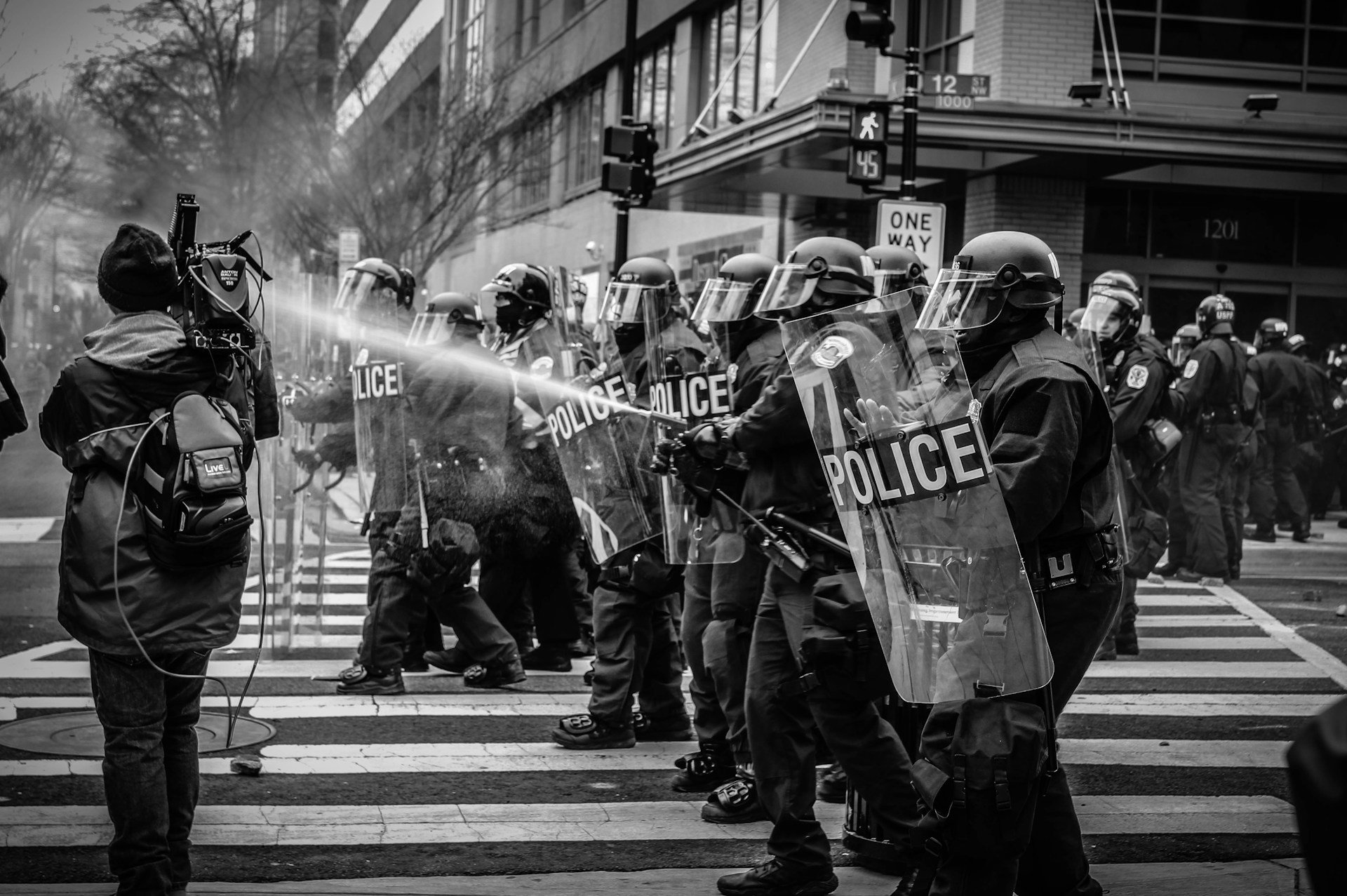
Photo by Markus Spiske on Unsplash