 Events
 Podcast
 Columns
 Library
 Contact




Aug 21, 25
Filed under: Action, Climate Change, Environment, US

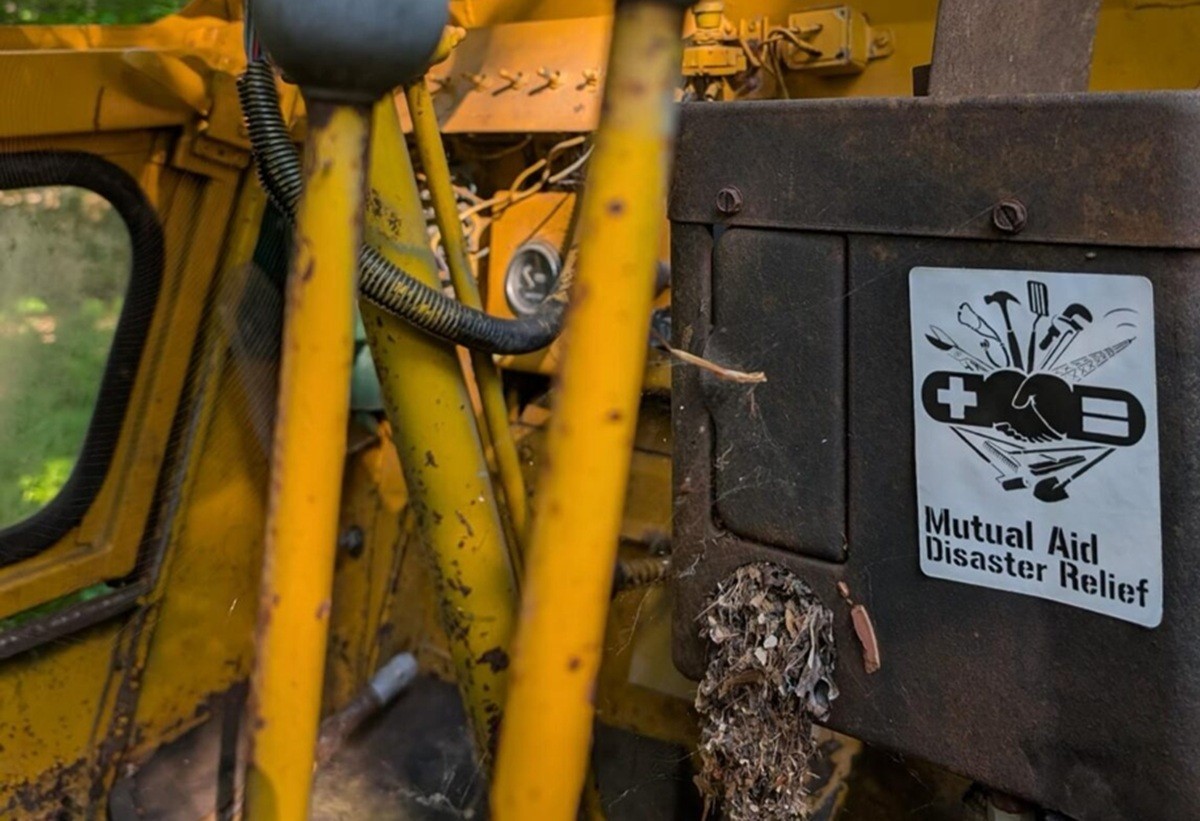
Mutual Aid Disaster Relief reports on autonomous mutual aid organizing in the face of the growing climate crisis.
We do not wait for help; we become it. Without permission, we build in the ashes, along the flood plains, and across the fault lines. Disasters keep coming, and we return again and again, not as saviors but as neighbors, kin, and fellow travelers carrying tarps and solar rigs, muck boots and coloring books, chainsaws, water filters, and a stubborn belief in collective survival.
The work is not bound to the arrival of cameras or the fading of sirens but grows slowly and steadily, call by call and door by door, shaped by people who know abandonment firsthand and refuse to abandon anyone else. Through crisis we organize, through grief we act, and through the daily practice of building with what we have, we remind one another that survival is a shared responsibility.
This year’s storms have been relentless. July alone brought more than 300 recorded flood events across the United States, a scale of devastation that cannot be ignored. At the same time, political sabotage has stripped away early warning systems, dismantled weather infrastructure, and left disaster response increasingly privatized and militarized. In the NC Triangle, unprecedented rainfall sent the Haw River surging and displaced hundreds, especially in Black and Latinx neighborhoods long denied basic protections. Triangle Mutual Aid responded with dry socks, hot meals, cleanup gear, and support for those facing FEMA denials and landlord neglect. In Kerr County, Texas, floods tore through working-class neighborhoods, claiming dozens of lives, including children at a summer camp. Austin Mutual Aid organized shelter support, deployed cooling stations, and distributed grief kits and hygiene supplies to families who had lost nearly everything, many of whom had no official warning before the water rose. In Wheeling, West Virginia, floodwaters filled basements, collapsed roads, and submerged entire neighborhoods. Community members and their allies took up the work of mucking homes, checking on neighbors door to door, and running supply hubs with mold abatement materials, cleaning kits, and home-cooked meals, stepping in where official systems stalled.
Across Appalachia, floods and tornadoes compounded the devastation that communities were already facing. But the people hauled water, mucked homes, delivered filtration systems, and ran ATV supply routes into cut-off hollers, while also sustaining elder check-ins, mold remediation, and tenant defense efforts. In Southern West Virginia, towns like Pineville and Madison saw catastrophic flooding this spring, yet residents organized to power phones, distribute supplies, and repair roads block by block. In Western North Carolina, the recovery after Hurricane Helene included not only supply distribution but also a disaster court watch aimed at stopping storm-triggered evictions. Tornadoes swept across Missouri, Kentucky, and Arkansas, hitting Black neighborhoods and neglected rural towns especially hard. In St. Louis, mutual aid crews mapped unmet needs, created tool libraries, and trained new volunteers in trauma care, chainsaw safety, and crisis logistics, making preparation itself a form of resistance.
In the Gulf South, hurricane readiness has become daily life. Crews in Florida, the Carolinas, and Louisiana stocked go-kits, ran radio and mesh network trainings, and offered workshops in blackout preparation and tenant protection. In Tampa, the Freedom Center continued as a vital hub, meeting the ongoing effects of last year’s storms while holding space that is deeply rooted in movement history and committed to radical, intersectional practice.
Further west, fire season began months early, with January wildfires sweeping through Los Angeles County. Mutual aid crews distributed N95 masks, CR boxes, and air filters, focusing on unhoused encampments and renters in industrial zones where toxic ash blanketed everything. The losses were not only burned-down houses but motel rooms made unlivable by smoke, families evicted after missing work, and children developing asthma in windowless apartments. When FEMA failed to arrive and landlords disappeared, mutual aid showed up, offering care without paperwork or conditions.
Puerto Rico’s communities continue to resist by building their own solutions. Locally run solar rigs and battery banks now keep water pumps, refrigerators, and communications systems alive. DIY repair trainings ensure this infrastructure remains in the hands of residents rather than the state, turning what might appear to be charity into an assertion of autonomy.
Beyond the borders of the so-called US, comrades in the Philippine Archipelago faced disaster layered with grief when a battery fire destroyed a home and mutual aid base in Cubao Quezon City, and injured a child. Crews responded with medical care, building supplies, and collective mourning, while also laying the groundwork for a Search and Rescue program that aims for national certification to bypass state gatekeeping and bring aid directly to the people. Soon after, a massive typhoon hit Las Piñas, collapsing bridges and cutting power to precarious urban neighborhoods. MADR-SR and local allies delivered medicine, food, bedding, and trauma care, while distributing solar kits and water filters to sustain communities for the long term. Local youth brigades and neighborhood organizers established full-scale hubs marked by defiance, dignity, and persistence.
Even a candle lit in such darkness remains light. We live in a time of permanent disaster, but also of permanent refusal. The state arrives late, if at all, while the NGO complex insists that people wait their turn. We cannot afford to wait.
Across our networks, people mow lawns so neighbors are not fined, repair brake lights so friends avoid police stops, and train in water purification, radio, trauma care, and logistics. We prepare for the next storm because we know it will come, and we refuse to cling to a “normal” that was always the crisis. Our meetings take place in basements and parking lots, in cul-de-sacs and forests, across lands and waters. We are not building empires but futures, and in those futures no one is disposable.
This is not a call for volunteers but an invitation to join something ancient and ongoing. We are the living network, with calloused hands that carry the work forward, with open doors that welcome those who arrive, with names remembered and spoken aloud, and with a flame that refuses to be extinguished. We are not going anywhere.