 Events
 Podcast
 Columns
 Library
 Contact




Sep 1, 25
Filed under: Announcement, Incarceration, Midwest, Publication, Repression, Solidarity

Announcing a new issue of The Opening Statement, an abolitionist publication from Michigan.
Celebrate our 25th issue of The Opening Statement! TOS is a free quarterly newsletter that features articles, poetry, political writing and opinion pieces by people inside and outside of prison. This issue of The Opening Statement includes two articles, an interview, and a poem. You will especially want to read our interview with JR, of the No Detention Centers in Michigan (NDCM) coalition, about the GEO Group reopening the notorious North Lake Detention Center in Baldwin, MI, as an ICE facility. North Lake reopened in late June and is already holding hundreds of detainees. If it reaches capacity, it will become the largest ICE detention center in the Midwest. MAPS is a long-time member of the NDCM coalition. Learn more about NDCM and join the fight with us!
The two articles both share a focus on abolition and reproduction. Finally, we include a poem, “Ghazal to Open Cages,” by Angel Nafis, from the poetry collection, Like a Hammer: Poets on Mass Incarceration. We hope you enjoy, share, and discuss this issue!
THE OPENING STATEMENT – SUMMER 2025 (CLICK THE LINK TO DOWNLOAD PDF)
ARTICLES AND AUTHORS LISTED BELOW:
- Notes from the Editors
- Ghazal to Open Cages Angel Nafiz
- We Need Reproductive Justice Now! An Argument for Abolition Rachel E. Utz, J.D.
- Building a World without Family Policing Dorothy Roberts
- Interview with JR of No Detention Centers in Michigan MAPS
Greetings friends and happy summer!
This issue of The Opening Statement includes two articles, an interview, and a poem. Both articles share a general focus on abolition and reproduction. “Reproduction” includes literally having kids, but it also goes way beyond that. Think about all of the work it takes to raise a kid: most obviously carrying a pregnancy and giving birth, with all of the health care and other forms of support that this entails; but it also requires buying and preparing food, providing and maintaining a place to live, along with childcare and schooling, emotional and physical care, activities and other forms of socialization. Often families, extended families, or chosen families/friends/communities are involved. We could call all of this work “reproductive labor.” Because of the way that our society is organized, this work is often delegated to women, who are often expected and even forced to do this work “because of their nature.” Of course, lots of people, including men, do reproductive labor—even in prison, think about who does the cooking and cleaning. In this expanded sense, “reproduction” refers not just to something women do by having kids, but to an entire social system that produces and maintains life on a daily and intergenerational basis—a social system in which many forms of oppression, inequality, and violence are embedded.
The first article, by the attorney Rachel E. Utz, proposes a framework of “reproductive justice” that uses this expanded sense of “reproduction” both to imagine a truly “just” world and to develop a political approach to get there. For Utz, the reproductive justice framework goes beyond pro-choice/pro-life debates by considering everything that is required to achieve and maintain bodily autonomy. Most importantly, Utz argues that reproductive justice requires abolition.
The second article, by the scholar Dorothy Roberts, introduces her book titled Torn Apart: How the Child Welfare System Destroys Black Families—and How Abolition Can Build a Safer World. In the article, Roberts discusses the violence and racism of the “child welfare system” and argues that this system works not to help children but to police and terrorize families, especially Black families. Roberts also explains how she came to see abolition as the best and really the only way to support the well-being of children, families, and communities.
Next up is our interview with JR, a member of the No Detention Centers in Michigan (NDCM) coalition, which is organizing against the reopening of a massive, for-profit ICE detention center in Baldwin, MI. (MAPS is part of the NDCM coalition.) In the last issue of TOS, we included a news item about the reopening of this detention center, and we wanted to keep following this issue both because it’s so close to home and because it’s such an important part of the Trump administration’s fascist “mass deportation” strategy. In the interview, JR talks about the history of this detention center, the organizing that NDCM is doing, and why abolition is an important framework for the group, among other topics.
Finally, we include a poem from the poetry collection Like a Hammer: Poets on Mass Incarceration called “Ghazal to Open Cages,” by Angel Nafis. We love that the poem keeps coming back to the word how—every line ends with this word, which pushes us to think about process. We’d love to hear your thoughts on the poem too.
Now for the news roundup. In MDOC news, an important lawsuit was filed on May 6 by prisoners at Women’s Huron Valley CF, alleging that guards violated the law by regularly using their body cameras to record strip searches and other situations where prisoners were exposed. Complaints about this horrible invasion of privacy were initially raised on February 17, but it took MDOC until March 24 to change its policy and require guards to put their cameras on “sleep mode” during strip searches. Even after the policy change, however, guards apparently continue to record prisoners in this way. We thought this was important to mention because many reformers see body cams as a real solution to the problem of abuse by guards, but in this case they have actually created new problems and new forms of abuse. What have you noticed about the rollout of body cameras at your facility? Have things changed for better or worse? How have guards reacted to the new requirement to use these cameras? Have you tried to request body cam footage, and if so have you faced retaliation for doing so?
In early June, the Detroit News reported that MDOC rolled out a new policy tightening controls on prisoners’ electronic tablets. The article mentioned changes to the approval and verification process and the inclusion of altered tablets as an example of “dangerous contraband.” Readers will know that we’re interested in prison censorship, so we wanted to ask if you have seen or experienced these new restrictions, and maybe other kinds of restrictions that weren’t reported on in the article. For example, we know that here in Michigan at the Monroe County Jail, guards refused to charge people’s tablets, making them useless. There was nothing in the policy that required guards to charge tablets, and they were the only source of reading material as the library had been purged of print books. Have you heard of or seen new restrictions on tablets, formal or informal?
In an article published by the Prison Journalism Project, we read that Thumb Correctional Facility is planning to transform an unused warehouse into a “self-contained college center” for all of the prisoners held there. According to the article, once the center is built, anyone at that prison who doesn’t meet certain eligibility requirements (including good behavior, minimum GPA, etc.) will be transferred. Increasing access to college classes is great, but having to maintain eligibility can turn this opportunity into a tool for administrators and guards to control and repress prisoners. Have folks at Thumb and elsewhere heard about the project, and if so what do you think?
We included an article in the Summer 2024 issue about the decision by the Federal Communications Commission (FCC) to enact new rules to reduce phone and video call rates for prisoners and to prohibit providers from paying commissions and kickbacks (i.e. bribes) to jails and prisons where they operate. The new rules were supposed to go into effect around the country in 2025, though facilities with active contracts were granted a one-year extension. (We’ve heard that rates did come down at some Michigan prisons at least.) Now, the Prison Policy Initiative (PPI) reports that the FCC has abruptly announced a two-year postponement for implementing these rules. Apparently, the decision comes in response to retaliation by a small group of county sheriffs in states like Arkansas who have said that if the FCC blocks their kickbacks, they will cut off phone calls entirely in their jails. Also, some Republican state attorneys general sued the FCC claiming that the new rules would make it harder to monitor calls (a service offered by the companies) and therefore a security risk. Obviously all of that is bullshit and the real reason is that they want to squeeze as much money as they can out of prisoners, families, and friends. The two-year postponement means that the rules won’t go into effect until April 2027, but in the meantime these sheriffs and the prison telecom industry will lobby against them as much as they can, so who knows if they will be implemented at all. In the meantime, we’re interested to hear from you whether call rates increase again.
A bit of good news for a change: Last fall, we reported on the Michigan Attorney General Dana Nessel’s decision to bring criminal charges against 11 students and community members who protested against the University of Michigan’s investment in weapons manufacturers that sell bombs, missiles, and other technologies of death to the Israeli government. When the local prosecutor declined to bring charges against these protesters, UM’s president and regents (members of the board that basically oversees the university) reached out privately to AG Nessel and asked her to bring the charges instead. She gladly agreed. (The Guardian reported that six of the eight regents had contributed thousands of dollars to Nessel’s electoral campaigns; one regent was co-chaired of her campaign in 2018; and several were personal friends with her. Nessel also received significant donations from pro-Israel politicians, organizations, and university donors.) But in May, after months of sustained pressure, she reluctantly dropped all of these charges! We hope that losing so bad in court makes her think twice about bringing charges like this in the future, but given her financial and ideological commitments we can’t be sure.
During Trump’s second presidential campaign, “millions of deportations” became a rallying cry for his supporters. Trump has been trying to make good on this promise since he took office, expanding and accelerating a deportation system strengthened by the Obama and Biden administrations. These efforts have come to a head since May of this year, as raids conducted by masked ICE agents have escalated in cities across the US. ICE has descended on Home Depots, day labor centers, car washes, high school graduations, elementary school playgrounds, summer camps, and farms among other locations, to kidnap people from their communities and disappear them into the bowels of the growing carceral system. ICE began a series of raids across California on June 6. Los Angeles, as well as surrounding cities, saw both localized protests against ICE, and the deployment of the National Guard in response. Solidarity marches took place in San Francisco, Austin, Chicago, New York, and other cities. Thousands of anti-ICE demonstrators have been arrested by local and state police, who have often aided and abetted in these raids as well. All along, ICE has become more and more brazen with broad daylight kidnappings, with sometimes more than 10 masked agents tackling, wrestling, and dragging away a single person.
We are learning more about the conditions of ICE detention in the US and frankly batshit deportation stories of regular people (our interview with JR also covers some of these issues). You may have heard of “Alligator Alcatraz,” the brand new detention center (or concentration camp) built in 8 days in the Florida Everglades on sacred Miccosukee land. A lawyer who tried to visit one of their clients there writes: “The facility is filling daily with more and more people, and it lacks basic infrastructure to handle its current capacity, while not yet having reached max capacity. Detainees are being issued inmate and booking numbers, but cannot be found on the ICE detainee locator, nor Collier or Miami-Dade County inmate searches. The population has been detained by ICE, but ICE is denying jurisdiction, saying it’s a state facility. My client has been denied access to his attorney, denied the right to file a motion for bond, which he is statutorily eligible for, and denied the right to a hearing on said motion for bond before an immigration judge.” Moreover, Trump supporters have been delighted at the prospect of detained migrants being “fed to the alligators,” which recalls historic anti-Black racism that referred to Black children as “alligator bait.” Postcards and cartoons from the early 1900s depicting this kind of racism dehumanized Black children and presented this violence as humorous. With the June 30 revocation of Temporary Protected Status (a specific visa status for people who cannot return safely to their country of origin due to armed conflicts, environmental disaster, etc.) for Haitians in the US, and with around 480,000 Haitians living in Florida alone, the deportation project is targeting not just Latinx people but also Black people for incarceration, torture, expulsion, and premature death.
On July 7, eight men were deported to South Sudan after the Supreme Court ruled that the Trump administration can transfer expelled immigrants to third countries with which they have no ties. Only one of the men in the group is Sudanese—the others are from Cuba, Laos, Mexico, Burma, and Vietnam. Prior to their deportation, they had been held in a shipping container in Djibouti. In our last issue, we wrote about the deportation agreements between El Salvador and the US to hold migrants captive at the CECOT mega-prison. Since then, many more people have been removed from detention in the continental US to extralegal sites in Djibouti and Puerto Rico (a US colony). Trump has also proposed pressuring countries like Nigeria, Rwanda, and Liberia into accepting deportees from the US, even if they are not from these countries. This pressure comes as Trump has also imposed new visa restrictions on Nigeria, while Nigeria tries to negotiate new deals with the US around critical minerals, oil, and gas. We wanted to include this information in our news roundup because we think it shows how prisons, jails, and ICE detention centers are all connected (another topic that comes up in the interview), and because Trump has repeatedly threatened to denaturalize citizens and deport them as punishment.
In our Summer 2024 issue, we wrote about the massive, youth-led protests against President William Ruto that had spread across Kenya. The protests have continued over the last year. Initially sparked in response to a finance bill that raised taxes on essential goods, the protests have broadened their focus to police violence and impunity, government corruption, and the high cost of living. The finance bill was retracted early on in June 2024, but since then the proposed taxes were implemented through other legislative amendments. Protesters remain resolute in their opposition both to the taxes and to the government as a whole. According to Al Jazeera and other news sources, police repression has continued and even intensified in recent months. This has included disappearances of protesters by government-backed goon squads, as well as the June 2025 murder of the popular blogger Albert Ojwang while in police custody. Recently, on June 25, organizers called for large demonstrations to commemorate the one-year anniversary of the movement. Police responded to the demonstrations with live ammunition, tear gas, and water cannons, killing at least 16 and injuring close to 400 across Nairobi, Kikuyu, Mombasa, Kisii, and other towns across the eastern side of the country. More recently, the nationwide annual “Saba Saba” (“Seven Seven” in Kiswahili) protests, which commemorate the movement for the return to multiparty democracy that began in 1990 on July 7 (or 7/7), faced brutal repression, with police killing another 11 protesters across the country. But protesters vow to not rest until Ruto is removed from office.
Israel’s genocidal war against the Palestinians continues. In the last TOS, we noted that Israel had begun a complete blockade of food and other aid at the beginning of March (during a ceasefire!). Israel partially lifted the blockade on May 19, which means that it lasted over 11 weeks. And even then, the aid they are letting in is extremely limited. In part, this is because of how it’s being distributed. In the wake of the 1948 nakba (“catastrophe” in Arabic), when Israeli soldiers and militias violently expelled 750,000 Palestinians from their lands in order to establish the Zionist state, a UN organization called UNRWA was set up to provide humanitarian aid and necessary services like education and health care (all part of what we called “reproductive labor” above) to Palestinian refugees and their descendants. Since it provides these necessary, life-sustaining services, the genocidal Israeli state has long targeted UNRWA in its attacks and more recently has persuaded the US government to cut off funding for the organization. All of that is important context for what’s happened since Israel partially lifted its blockade. Israel and the US have backed a new organization called the Gaza Humanitarian Foundation (GHF) to replace UNRWA and deliver aid (hm, what could go wrong?). While UNRWA provided aid for Gaza’s more than two million inhabitants at 400 locations, GHF uses just four sites. These sites have quickly become death traps. As of July 7, The Guardian reports that Israeli soldiers and US mercenaries working for GHF have killed almost 800 Palestinians who were lining up for food aid. At least 4,000 people have been wounded. The Israeli military calls these aid sites “combat zones,” rhetorically turning desperate men, women, and children trying to survive starvation into “enemy combatants.” Palestinians are being killed not only with US-made guns, bombs, and missiles, but with forced starvation and the lure of humanitarian aid.
Did You Know? This is our regular feature about histories from below that have been silenced or distorted by the powers that be. Although ICE was created relatively recently, following 9/11, the violent policies leading to mass deportation and the revocation of birthright citizenship reflect the heart of the US’s immigration policy from the very first: “nation of immigrants” is just as laughable as “home of the free.” There are countless examples of this, from the Chinese Exclusion Act to Eisenhower’s “Operation Wetback,” but for this issue’s Did You Know? we are going to look back at a time when, like today, America undertook a campaign of ethnic cleansing against Central American people.
During the Great Depression, from 1929-1939, nearly 2 million Mexicans and Mexican Americans, many of them US-born citizens or workers who had been recruited to migrate to America during a 1920s labor shortage, were deported to Mexico. Armed federal agents raided parks, farms, social clubs, and hospitals, demanding that anyone with brown skin or a name government officials thought sounded “Mexican” supply proof of citizenship. Anyone without papers on hand was arrested and loaded onto a train. At the time, it was called “repatriation”; today, we call it ethnic cleansing. The ethnic violence was supported by nativist labor unions like the American Federation of Labor, which argued that the actions would lead to more jobs and higher wages for white American workers, but the opposite was true: cities where border patrol launched large repatriation raids (like L.A.) had overall lower wages and higher unemployment throughout the Depression.
The raids also were one of many repressive tactics used to quell the wave of multiracial labor organizing taking place on California farms, and this union busting may have been one reason wages were lower in areas where raids were widespread. Mexican agricultural workers, alongside Filipino workers and white Dust Bowl migrants, founded the Communist-aligned, multiracial Cannery and Agricultural Workers Industrial Union in 1929, organizing massive strikes in 1933 and 1934, including the Cotton Strike, which was the largest Agricultural strike in US history. Workers demanded ice and clean drinking water, outhouses, raises, picking sacks, and compensation for injured workers on lettuce, melon, cherry, berry, pear, and pea farms. Striking workers were attacked and murdered by members of the Associated Farmers, a fascist vigilante group who collaborated with local prosecutors to have strike leaders arrested under the Criminal Syndicalism Law. The brutal repression of workers’ rights in the fields worked in symphony with the violent border patrol raids on homes and communities—a reminder that current calls for “American jobs” are not only nativist but also a cudgel for keeping all workers under the thumb of capital.
We hope you find this issue of TOS interesting and useful. As always, we invite you to send us any thoughts, analysis, ideas, and suggestions you have in response to the contents of the newsletter. We’re always excited to receive your essays, stories, poetry, art, illustrations, and anything else you want to share. Unfortunately, MDOC now blocks TOS issues that contain writing by Michigan prisoners, so we can’t include these writings here. But we would love to hear from you anyway, and we’re always looking for suggestions for themes for future issues and topics for future interviews as well. Be sure to share this issue with friends.
With respect and solidarity,
MAPS
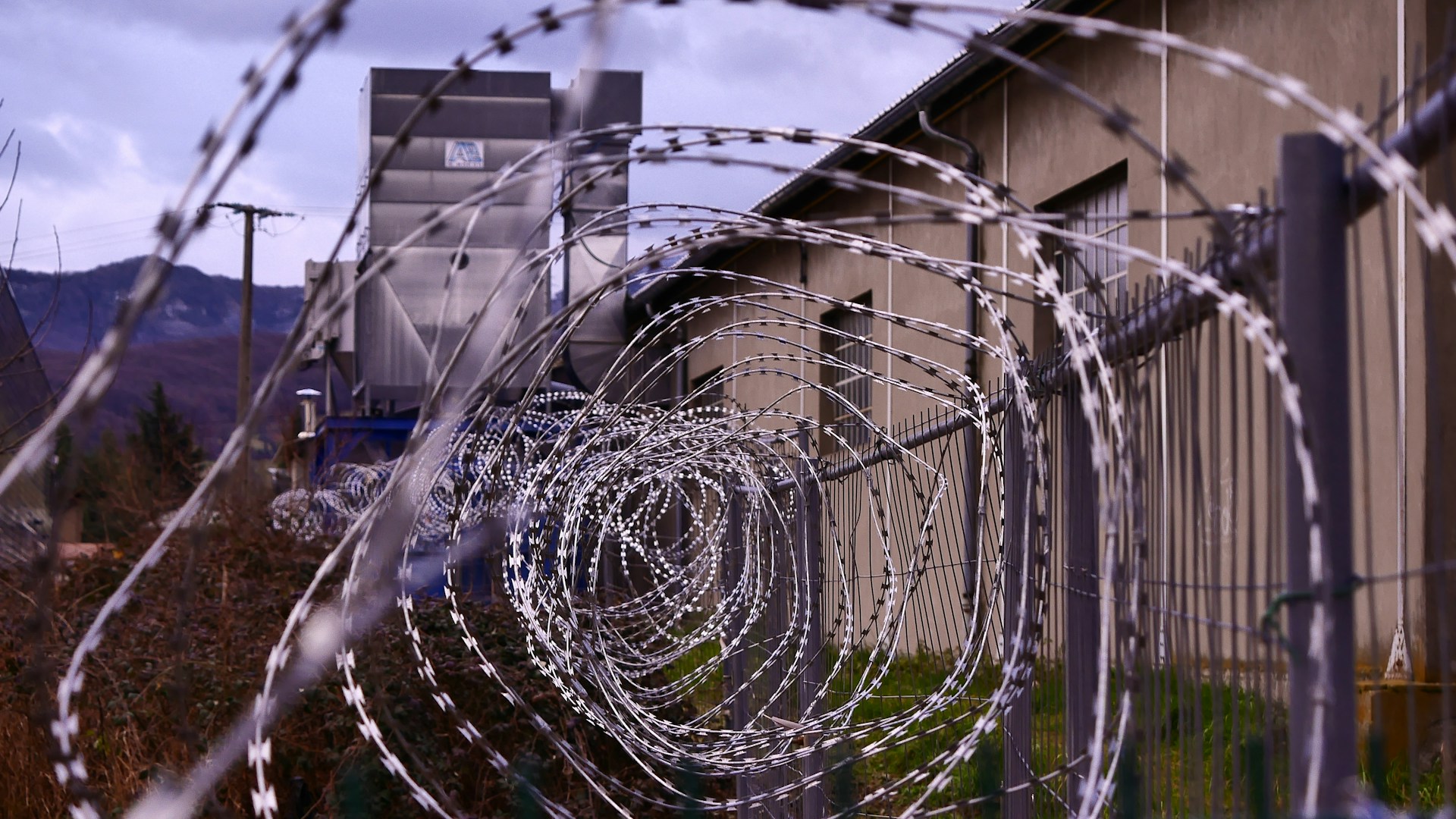
Photo by Hédi Benyounes on Unsplash