 Events
 Podcast
 Columns
 Library
 Contact




May 18, 25
Filed under: Action, Anarchist Movement, Featured, Pacific, Sports

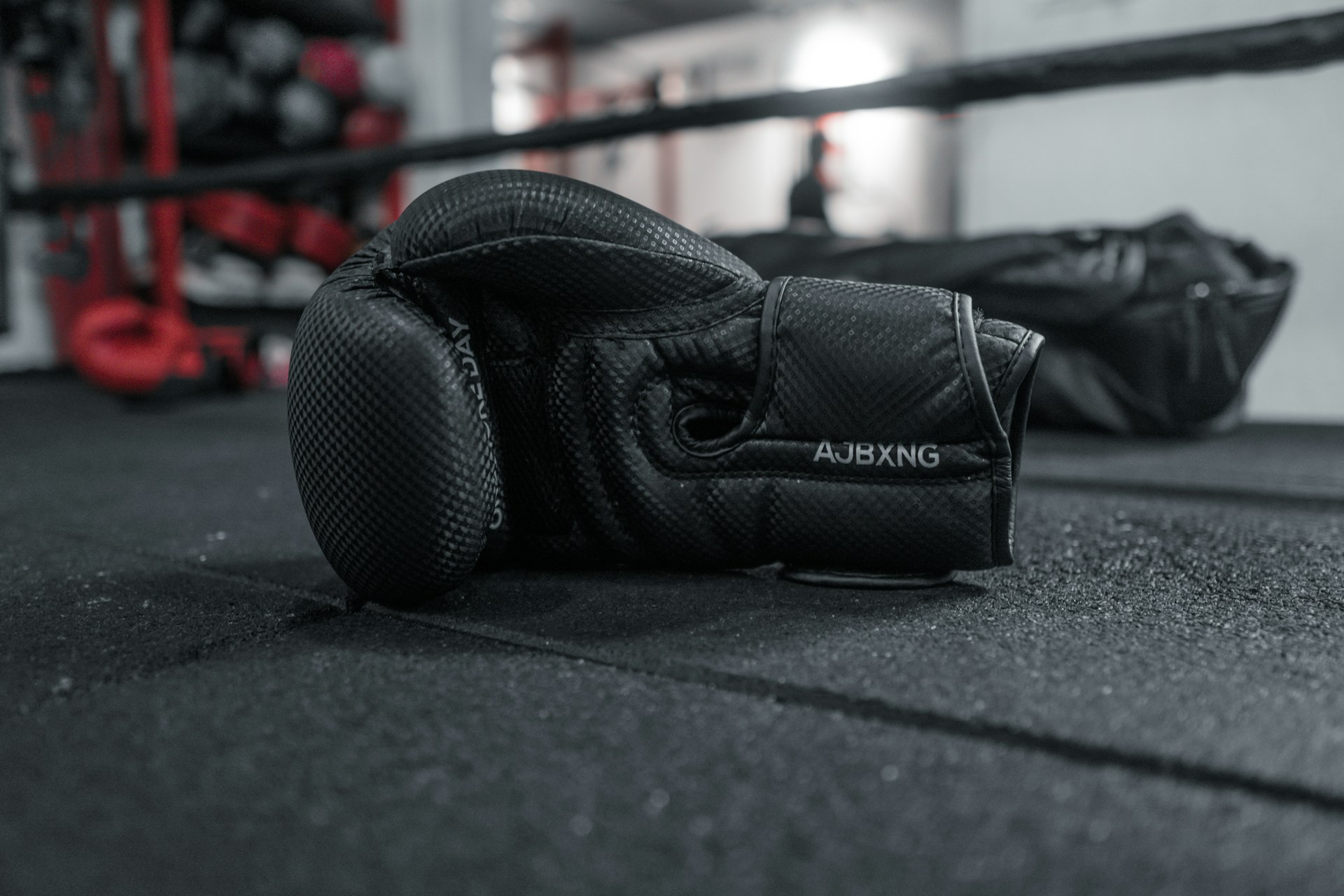
Report on anarchist community event featuring fighting sports in the bay area of California.
With a jab and a cross, the first match of All of Competitors Are Beautiful started with two boxers on the mat, cheered on by a lively audience of about two hundred. In the fall of 2024, 14 fighters showed up for the All Competitors Are Beautiful fight night and rave in a cutty San Francisco location, for one boxing match, five Muay Thai/kickboxing matches, and one Brazilian Jiu Jitsu (BJJ) match. Each fighter walked out to a song of their choosing, welcomed to the mat by an MC who announced the fighter’s bio. ACAB was loud, it was enthusiastic, and it gave competitors real-time feedback on their fight skills.
Scheduled to align with Bash Back and the Bay Area Anarchist Book Fair, this anti-fascist event was explicitly put together to give fighters the opportunity to compete at a high intensity and practice their skills on the mat. The event organizers—mostly queer and trans fighters themselves—were inspired by smokers in Philadelphia and Raleigh, and anarchist fight nights across the world, along with Bash Back and Palestinian solidarity events.
Militant events that build camaraderie among queer and trans anarchists feel needed more than ever. Additionally, for some of the queer and trans organizers, the process of learning to fight and sparring are the times when we feel the most free in our bodies. Fighting can be an opportunity for competitors to show strength and power, and also show heart and responsibility to our partners and our collectives so that we respond to conflict with intention rather than just reaction.
In the following article, the ACAB organizers want to share our processes so that other people can learn what to do—or not to do—from the experience of pulling off this event.
Lead Up to the Event
Two months out: A small group of organizers from all over Northern California began talking about planning a fight night, then started reaching out to potential fighters. We also had a verbal agreement for a venue, which had been chosen because it had space to set up mats for fights and a dance floor, as well as smaller rooms for decompression and massages. The group met online via a Jitsi link. We would have used Signal group video calls, if that had been available at the time.
The fight organizers also began a discussion that we continued throughout planning: We didn’t want for the event to be just about sports or self-defense. Instead, we saw it as a way to respect our dead and to prepare ourselves to collectively fight back and to attack when we choose. By proactively preparing for worst-case scenarios with friends and lovers, we can be dangerous together and make sure no one is left alone.
6 weeks out: The organizers and fighters had our first online meeting to start discussing all the details for the fight night and rave. We quickly decided that we would need more fighters, an MC, medics, harm reduction supplies, and security to make the evening happen, and recruited over the next few weeks. One of the organizers created a Cryptpad form for potential fighters to fill out and shared the link with the group. And we decided to meet every week to continue planning. For security reasons, we decided against any photos or videos the night of the event. Any promo for the event needed to be over Signal or in person.
For the volunteers doing security the night of the event, they were in contact with each other by walkie-talkie during their shifts, as they walked through the crowd and throughout the venue. Their priorities were to make sure no one was taking photos and to monitor if fash showed up. If security did find someone taping, the security person were to first ask them to stop, and then alert everybody.
The no photos discussion was a recurring topic because there was never complete agreement on the decision. One point in favor of photos or videos was for fighter development, so they could learn from their matches afterward. A counterpoint is that any recording opened up risk for fighters and audience members, even if you blur out faces—and you’d have to blur out tattoos too.
5 weeks out: Unfortunately, venue space #1 backed out—fortunately, one of the organizers was able to find another spot pretty quickly. There were also a few big questions we had to figure out:
- What glove size for boxing and Muay Thai matches? After a lot of discussion, we landed on 16 oz.
- What COVID precautions did we want to agree on? After a lot of discussion, this is where we got to:
Do not attend if you have had a fever or respiratory illness symptoms within the past 24 hours. Masks will be required inside for spectators through the end of the fights, 10pm. All fighters will have had a negative COVID test the day of.
There may have been another event in the space where people were unmasked earlier the same weekend. Masks are always encouraged, especially if you’ve recovered from illness or had exposure in the past 5 days. But masks will not be mandatory for the dance party, after 10pm. This is not an event that is free from COVID exposure risk.
4 weeks out: We decided on rules for the matches. The Muay Thai / kickboxing guidelines needed the most attention, and here is a shortened description of where we landed:
- Required gear: mouthpiece, hand wraps, 16 oz gloves, tape for gloves if laced, cup for those who need it, shin guards without metal buckles. Headgear optional at the discretion of each individual fighter.
- No intentional knockouts.
- No excessive power to head.
- No elbows, no sweeps and dumps, no spinning kicks to head, no spinning fists, no oblique kicks, no knee kicks.
- Keep teeps to waist and torso only.
- No knees to the head at all!
- Two knockdowns in one round will result in the fight ending.
Rather than determining match winners by judges and points, we decided that the final judging for the matches would be done Colosseum style, with the MC encouraging the crowd to cheer for the winning fighter. The fighter with the loudest cheers would win.
3 weeks out: A smaller group of organizers toured the event space, made notes to share about accessibility, measured the room to fit mats and other gear, and made a list of supplies we needed to get for the event. One of the organizers made a reservation for a UHaul to bring all the gear to the space.
Gear list:
- Mats and mat tape
- Cones and caution tape to keep people from walking on the mats before the fights started
- Moving blankets secured with duct tape to wrap around sharp corners and protruding electrical outlets in the vicinity of the ring
- Swiffer mop, bleach wipes, absorbent towels for cleaning and drying mats between rounds were on hand
- Spare 16oz gloves, hand wraps, guards, and mouth guards
- Puzzle piece maps for the warm up space
- Snacks
- Wound care equipment
- Digestive meds, harm reduction supplies, and safer sex supplies
- Cash lockbox, pepper gel, umbrellas, radios, flashlights
- Saint Andrews cross for the rave.
2 weeks out: Fighters got matched up and connected with each other so they could talk in advance of their fights. Fighters got matched by size and experience (not gender). We finalized key roles for the party, which looked like this (we gave people lots of different ways to be involved):
- Medics: We had a team of two during the fights. For the party, we had one medic. They had no issues to deal with but having somebody on medic duty is important.
- Referees: Two for Muay Thai/kickboxing, one for BJJ.
- Door people: We accidentally had three to four people on the door at any given time but two would have been plenty.
- Security: There were four people on during fights and two during the party. More would have been better!
- Setup/Breakdown: We had about four people just doing this in addition to about six fighters/security people/other organizers. With that many people it went smoothly BUT we should have more non-fighters on board so fighters don’t have to do so much.
- MC: Along with announcing fighters as they walked into the ring, the MCs provided summaries of the action after fights for those who cannot clearly see the ring.
- Timekeeper for matches.
- Driver: We planned for a driver in case somebody needs to leave event for medical reasons, but that didn’t happen in the end.
- Sound and lighting: We had two sound engineers and one lighting person.
- Corner emotional support: We had some volunteers but every fighter brought their own. One fighter made the point that emotional support, and being able to talk out their experience, was more important than physical support for them, and that it made a difference in how they evaluated how their fight went.
- Massage therapists for fighters.
- Communicator: This role acted as a hub, and meant fighters and organizers were updated continually. The communicator was the main reason that the event went as well as it did: everyone may not have agreed with every single decision, but we all knew what was going on. At the same time, this was a role that carried the disproportionate weight of organizing work—we are very grateful for the communicator’s willingness to dive deep throughout this project.
- The crowd: ACAB’s audience played a huge role for the night. They decided on who won matches, helped nudge fighters from the edge of the mats, and carried winning energy in their cheers.
1 week out: The group and fighters reviewed our notes to see if any other follow up was needed. The fighters had to send the DJs their walk out songs and the MC their short bio.
The Event
The day of: The main group responsible for set up got to the space six hours before ACAB to set up and let people in. Beyond the mats and the fighting space, we also set up more mats for a warm up area, a decompression room for fighters, a massage room, a medic space, a harm reduction table, and an altar to remember fighters no longer with us.
For the fight schedule, we capped the number of fights at eight since we had about two hours allotted to complete them all. We chose to go with three 2-minute rounds for boxing and Muay Thai (one minute break between each round) and one 6-minute round for BJJ. With dramatic walkout intros, breaks, and judging, each fight lasted about 15 minutes, and we were able to give the audience an intermission halfway through.
Once the fight part of the evening began, one of the organizers welcomed everyone into the space and set expectations for what the crowd was about to see, and reiterated the message that no photos were allowed. The MC coached the crowd on how to cheer for the winner and what to look for in terms of skilled fighting. They also asked the crowd for help: to say something if they saw any cameras, and asked spectators who were comfortable to come close to the boundary of the mat to avoid having fighters accidentally stepping off the edge and rolling an ankle. These inner spectators were to provide a nudge or push to fighters if they drifted outward.
The fighters brought a lot of heart for their matches, and the audience responded with a lot of encouragement and energy for all of them. The first match was three rounds of boxing, which started out strategically, as each fighter was feeling each others’ defenses and checking for weaknesses. The second round ratcheted up intensity, which continued in the last round as they traded hard shots to the body and face.
Next, Muay Thai and kickboxing matches followed. In the second match, both fighters came in hyped, but the match had to be stopped when one of them got an asthma attack. The third match was between two kickboxers, one who was an aggressive brawler, and the other a cool-headed, technical fighter. The kickboxers in match number four approached each other with speed and aggression, and then their round ended with a TKO, when the winner connected a surprise knee to their partner’s torso, sending the wind in their lungs to another dimension.
For the Muay Thai fight that followed, the fighters agreed to no elbows and to also meet each other’s power. And while the fighter pairing had notable differences in height, weight, experience, and conditioning—and it was one fighter’s first ever fight—it was a surprisingly evenly matched fight, which one competitor said was cool to experience in real time.
The only Brazilian Jiu Jitsu match featured an experienced player and another competing for the first time. They hugged it out at the end, after the purple belt controlled the fight and ended the match with a triangle attempt before time ran out. The last kickboxing fight was a last-minute match up between one of the refs and fighter whose original opponent had dropped out.
By the time the dance party started, the fighters were tired, the crowed was amped, and the organizers were relieved that we had pulled it off. The rave went on til 6am, and then got wrapped up as fast as the organizers could get out of there.
After the Event
A week after: We met to celebrate and to share lessons for next time. The top takeaways were:
- Don’t have fighters also do security or other tasks.
- Future events should have a care event for fighters in the following week. We had fighters with experience about how hard to go, and some of the matches still weren’t aligned on energy. The fighters still took on risk no matter how well they talked about things beforehand.
- Slow down! Take more time between fights, to get the crowd involved, and to modulate energy for room. For instance, we could have longer breaks between fights for music and decompression for partygoers as well as community-building, like demos for teaching some martial arts.
- Next time, decide on winners via a mix of judges familiar with the fighting discipline and audience response.
- Medics need a clear path to the mats at all times to be able to reach fighters quickly if they need care.
- The no photos discussion was never completely resolved, mostly because some fighters wanted photos or videos for fighter development, so they could learn from their matches afterward. A counterpoint is that any recording opened up risk for fighters and audience members, even if you blur out faces and tattoos.
Two of the most outstanding reflections: one fighter realized “until you start sparring, you don’t know what you have, and you need to have communal knowledge growth.” Another explained that “you need community to strengthen your skills—you need other people to see your strength and also see what you need to work on.” And a kickboxer noted that they “felt good to explore intense fighting within the intentional container of the event.”
Through our six weeks of working together, the organizers and fighters set up a solid event, where we were allowed to be emotional together, and to also be in conflict and repair as we made difficult collective decisions.
***
In closing, one of the best outcomes of the event is that there is a group of queer Muay Thai fighters meeting up every week to continue to train. The organizers hope that this has been helpful for any other groups looking to put together an anarchist fight night.
Lastly, we want to honor Bash Back history and Palestinian solidarity, as well as the cherished memory of a Black, trans, neurodivergent fighter and comrade we lost to suicide.
Photo by Prateek Katyal on Unsplash