 Events
 Podcast
 Columns
 Library
 Contact




Apr 28, 25
Filed under: Editorials, Land, Mexico, Repression

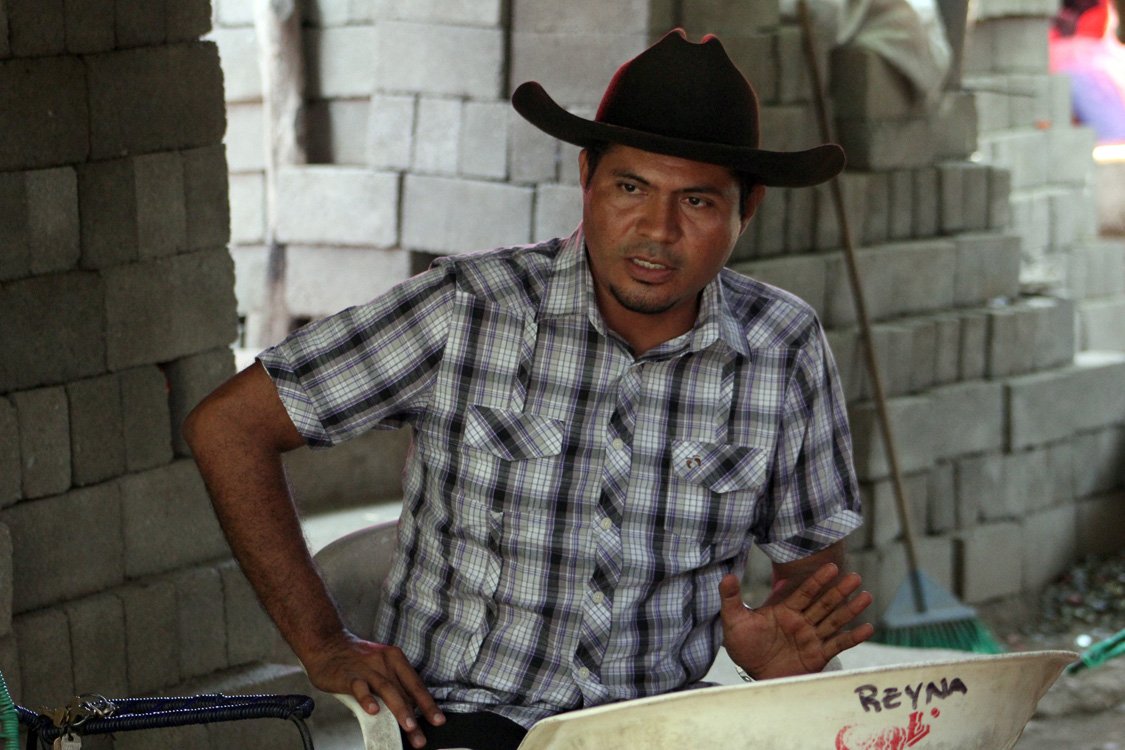
The following article by Vidulfo Rosales Sierra, translated by Scott Campbell, pays tribute to Marco Antonio Suástegui, a longtime and well-respected community organizer in Guerrero, Mexico, who played a key role in the defeat of the neoliberal La Parota dam project. He was targeted by a gunman and shot eight times on April 18, passing away on April 25.
Marco Antonio Suástegui Muñoz, son of Pedro Suástegui Valeriano and Noelia Muñoz Rodríguez, campesinos from La Parota. The Suásteguis are the founders of the communal nucleus of Cacahuatepec, they and other families fought for the creation of communally held property. Later, other leaders would be coopted by the PRI members of the National Campesino Confederation (CNC), one of the cacique figures was Eduardo Valente Navidad. These corrupt leaders handed out commission positions and sold lands to the highest bidder.
In 2000, the federal government began to talk about several large-scale infrastructure projects. Airports and large dams to generate energy and provide water to cities and towns would be built. One of these was to be in Guerrero. It was La Parota hydroelectric dam. It would cover an area of 17,000 hectares and would be 190 meters high. It would cover the municipalities of Acapulco, San Marcos, and Juan R. Escudero. The reservoir would be used as a lake for ecotourism. The bay of Acapulco would be joined with La Parota dam.
In 2003, with René Juárez as governor, engineers from the Federal Electricity Commission (CFE) began to build wells and sample houses, heliports, and other basic works, without consulting the community. The campesinos became concerned and obtained information about the damage caused by the work.
The communities of Garrapatas, Arroyo Verde, and San José would be buried under water. This worried them and, in their assemblies, they decided to set up an encampment in El Fraile to block the passage of machinery and CFE personnel. The campesinos went to see Marco Antonio and Felipe Flores for advice and to strengthen the movement. Marco Antonio did not hesitate for a moment. He went to the encampment. Together with Felipe Flores, they began to organize the struggle, traveling through various communities with communal lands, the ejidos of Dos Arroyos and Los Huajes.
Marco Antonio was a young Afro-Mexican, recently graduated as an architect, resolute and with a natural oratory that captivated the campesino masses. He gave new energy to the Council of Ejidos and Communities Opposed to La Parota Dam (CECOP), constructing a narrative that redefined the history of the struggle for the land of General Juan Dorantes, the importance of the land, natural resources, and the Papagayo River, to which they were inextricably linked. The land and water were his habitat.
The Papagayo River nourished them and ensured life, there they cured the sick. It had a sacred dimension that guaranteed the cycle of life. To dam it meant to die slowly, and they would not allow that. Marco Antonio’s cry was strident and resonated in the hills and plains of Cacahuatepec: the land is not for sale, it is loved and defended!
Marco Antonio’s mettle and bravery strengthened the campesinos. They would no longer be deceived nor intimidated as Rubén Figueroa had been when they built the Agua Papagayo II system that supplies water to the tourists in Acapulco. On that occasion, the governor arrived with his foot soldiers at La Parota. There in a tree hung a rope. Categorically, he told them: “ask me for what you want and whoever does not agree with the construction of the water intake should raise his hand so we can hang him right now.” No one raised their hand. The project was completed and the promises went unfulfilled. That was no longer going to happen, they were going to defend the river at all costs and now they had a charismatic and brave leader to accompany them.

The trial by fire occurred on August 14, 2005. That day the government deployed the full force of the State with thousands of riot police to guard the assembly held in the community of El Campanario, located near San Marcos, far from the bastion of the communities in resistance. Marco Antonio and the people of CECOP made their way there as best they could. The enraged crowd overtook the police and the organizers of the assembly where they planned to authorize the expropriation and occupation of lands for the dam.
Marco’s courage and the strength of CECOP awakened the sympathy of the community members; this action signified a triumph for the movement. The neoliberal project was beginning to crumble. Although later, agrarian assemblies were imposed by force, they were inherently flawed and agrarian courts ruled in favor of CECOP that they were null and void. These setbacks for the government meant that they didn’t have legal permission to begin the bidding process. Companies saw a risky investment and La Parota hydroelectric dam project was derailed.
The boldness of Marco Antonio and CECOP did not go unpunished. The campesino leader soon began to be persecuted. In 2005, he was jailed, accused of illegally detaining some CFE engineers and stealing machinery. Under Ángel Aguirre, they fabricated crimes of robbery and damages for the supposed assault of a gravel businessman. With no legal basis, he was taken to the high-security prison in Tepic, Nayarit, violating his right to defense and far from his family as punishment for defying them. Under Héctor Astudillo, once again they tried to implicate him in a multiple homicide that he did not commit. No crime was ever proven against him. The judges absolved him of all the false charges the government accused him of.
When it seemed that everything returned to normal, he was shaken by the disappearance of his brother Vicente Iván Suástegui Muñoz, also a leader of CECOP. On August 5, 2021, Vicente was violently taken by armed men. To date his whereabouts are unknown. Marco Antonio began searching and demanding justice. He openly denounced those who disappeared him, which earned him new threats. Even on Icacos Beach, where he worked providing tourist services, they showed up wanting to kill him. Dozens of times he made reports and requested protection from the state and federal governments. They never listened. They ignored his reports, and on April 18, he was attacked by a gunman who, with total impunity, opened fire on the beach, shooting the CECOP leader. In the hospital, he fought for his life. As I was writing this text, the historic leader and water defender lost his life.
His death cuts to the deepest part of the soul. Marco is an icon of social struggle. He is one of those leaders who did not give up, who was not daunted by anything or anyone. He put his life at the service of the poor of Cacahuatepec. He confronted the powerful to restore dignity to those below. Marco defeated those who sought to plunder the Papagayo River. We demand justice for his insidious murder. Honor and glory to Marco Antonio Suástegui!