 Events
 Podcast
 Columns
 Library
 Contact




Apr 9, 25
Filed under: Analysis, Education, Mexico, Repression

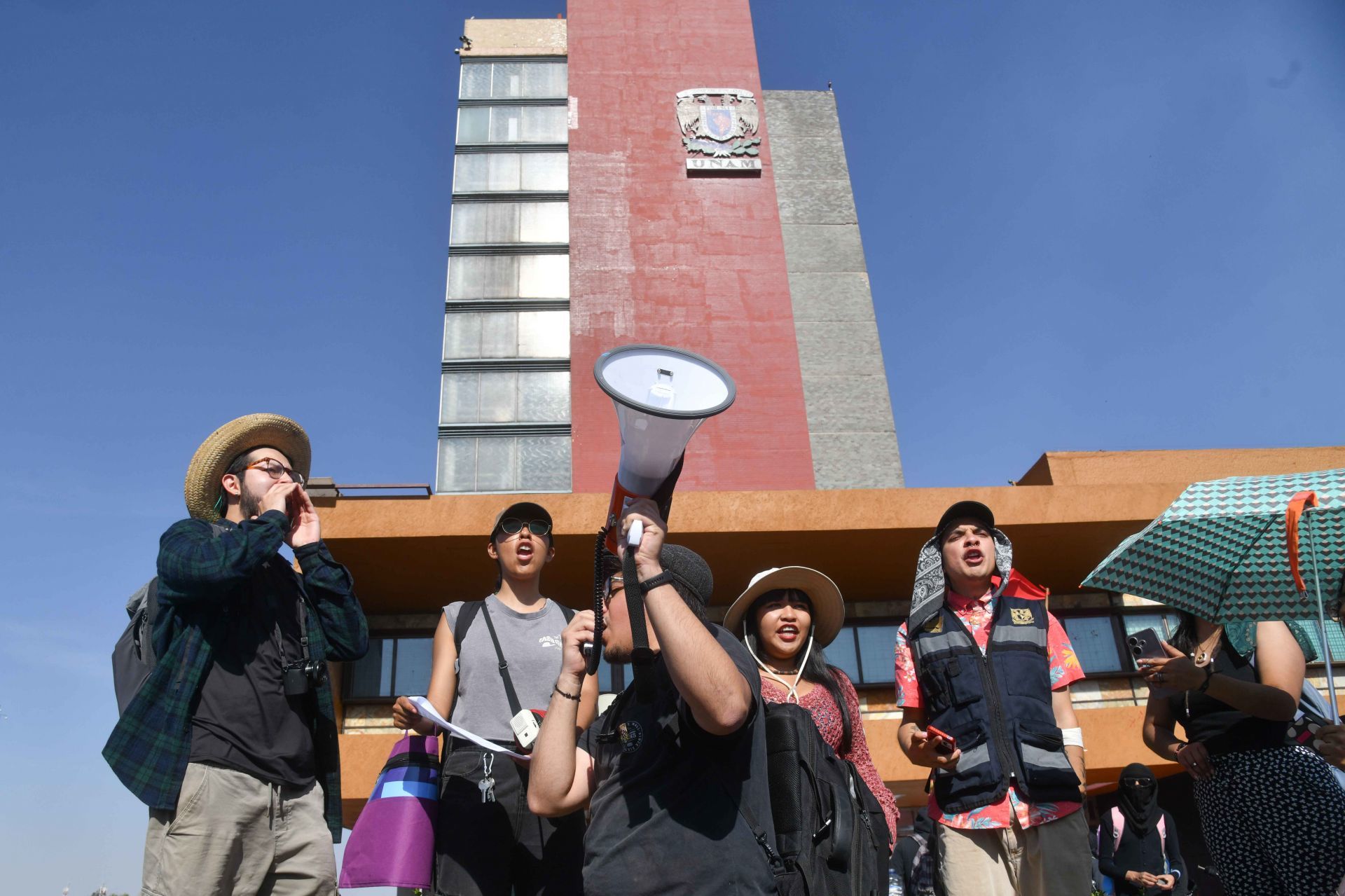
A short text by Camilo Ocampo, published on Pie de Página and translated by Scott Campbell, that looks at recent developments at the National Autonomous University of Mexico. Since the publishing of this article, the struggle has spread throughout UNAM, with reports of five departments on “total strike” as of Wednesday, April 9, 2025. Those are Social and Political Sciences, Arts and Design, Engineering, Chemistry, and Architecture; with a partial strike in the Economy Department.
In the midst of a politically tense atmosphere within UNAM, the University Council, the highest governing body, approved a change in Article 15 of the University Tribunal Regulations, which seeks to implement the suspension or expulsion of students and academics who engage in “acts of vandalism” on the institution’s campuses, as well as those who participate in drug dealing.
Students, workers, academics and even part of the University Council warn that this measure violates the freedom to protest, given the lack of clarity distinguishing between what is considered an act of vandalism and the right to protest.
This is the first modification to the document since its creation in 1945, and forms part of a series of changes being pushed during the Lomelí administration as the head of the institution.
Reform comes amid protests
The reform takes place in a political climate marked by the intention of university authorities to restructure the University Tribunal, toughening sanctions against those who participate in protests.
On the other hand, the student mobilizations do not cease. As a result of the demand to implement cafeterias subsidized by the university, other problems within the community have come to light.
The demands remain the same: a halt to the repression exercised by the rector’s office – through shock groups, such as porros, present in different departments –, the elimination of quotas in graduate courses, respect for the right to protest without reprisal, better security, and the democratization of the university.
The community mobilizes
Faced with UNAM’s attempts to demobilize the students, they have marched to administrative buildings to demand solutions, in addition to blocking roads surrounding University City as a show of discontent with the authorities’ decisions.
In addition, departments such as Social and Political Sciences, in University City, broke out in strikes after massive assemblies. These protests are in addition to those occurring in other parts of the country, such as the National School of Higher Education in Mérida, Yucatán and the Colleges of Sciences and Humanities high school system.
They are still waiting for a national mobilization to support their demands, the principal one being the implementation of subsidized cafeterias in all campuses of the National Autonomous University of Mexico.